
Living in a Flood Vulnerable Area:
Downstream of Stouffville Dam
Reducing flood risk in the Duffins Creek watershed
Use the information on this page to help you understand and prepare for flooding if you live near Stouffville Dam or Stouffville Flood Control Channel in the Town of Whitchurch-Stouffville.
1. KNOW YOUR RISKS
Living Downstream of Stouffville Dam
Living downstream of a Toronto and Region Conservation Authority (TRCA) flood control dam means being part of a community safeguarded by flood control infrastructure.
Flood control dams are essential for protecting communities during heavy rainfall and flooding.
However, they can also pose risks, making it important to stay informed, prepared, and aware of potential hazards.
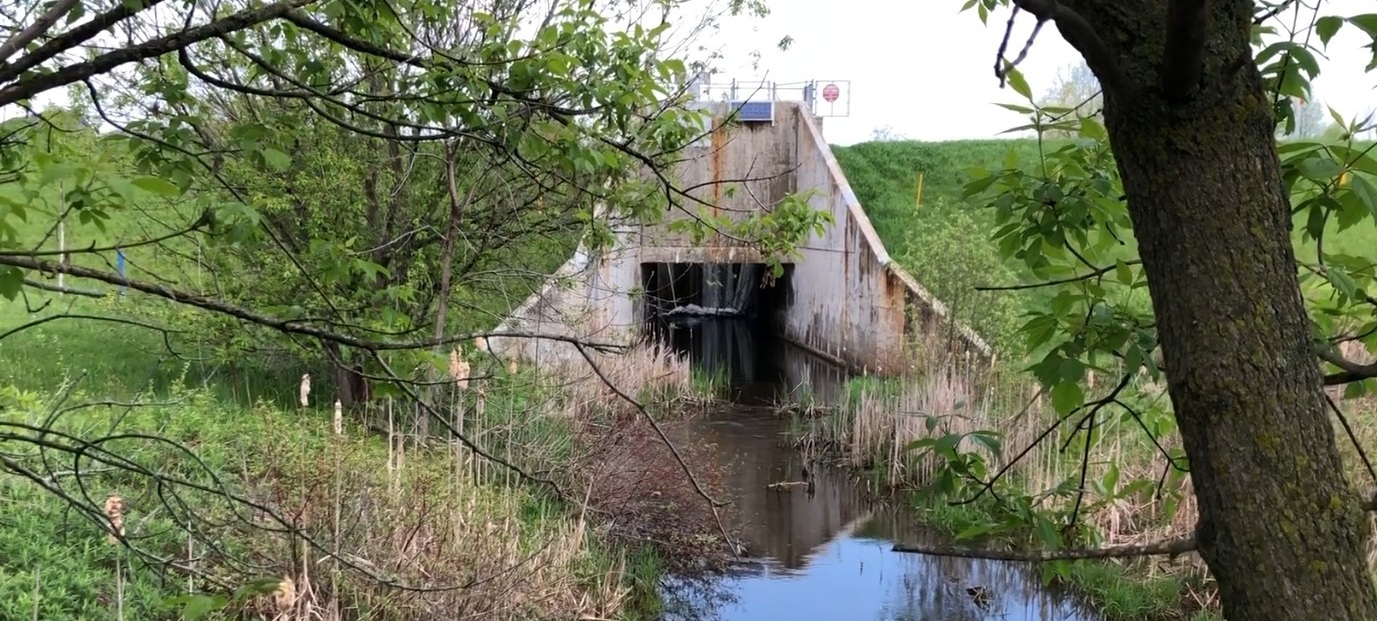
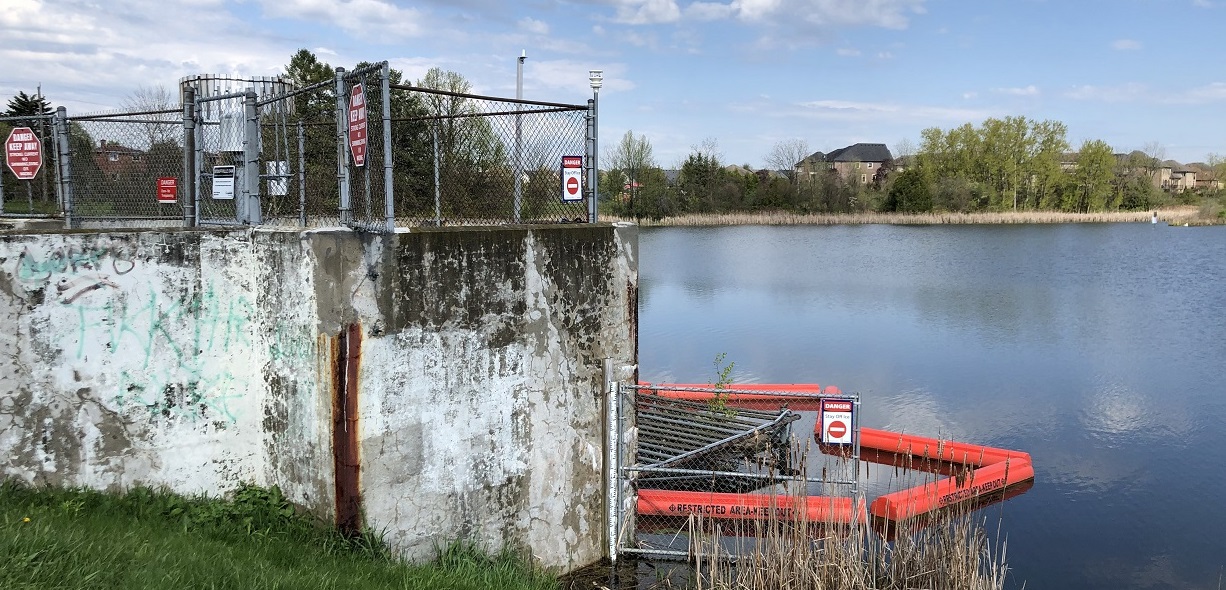
Stouffville Dam, located in the Duffins Creek Watershed, is owned and managed by TRCA. It was designed to protect the Town of Stouffville from flooding.
Built upstream of the Stouffville Channel, the dam reduces the risk of flooding to the community.
About Stouffville Dam and Channel
The downtown area of Whitchurch-Stouffville has historically faced flooding issues. The Stouffville Dam was built in 1969 as part of TRCA’s 1959 Flood Control Works Program, in direct response to the flooding caused by Hurricane Hazel in 1954.
On October 15-16, 1954, Hurricane Hazel brought unprecedented rainfall and severe flooding to Toronto, resulting in 81 deaths and leaving thousands homeless
The devastation from this storm highlighted the urgent need for flood control measures, leading to the establishment of the Flood Control Works Program and the construction of of the Stouffville Dam.
Learn more about Hurricane Hazel.
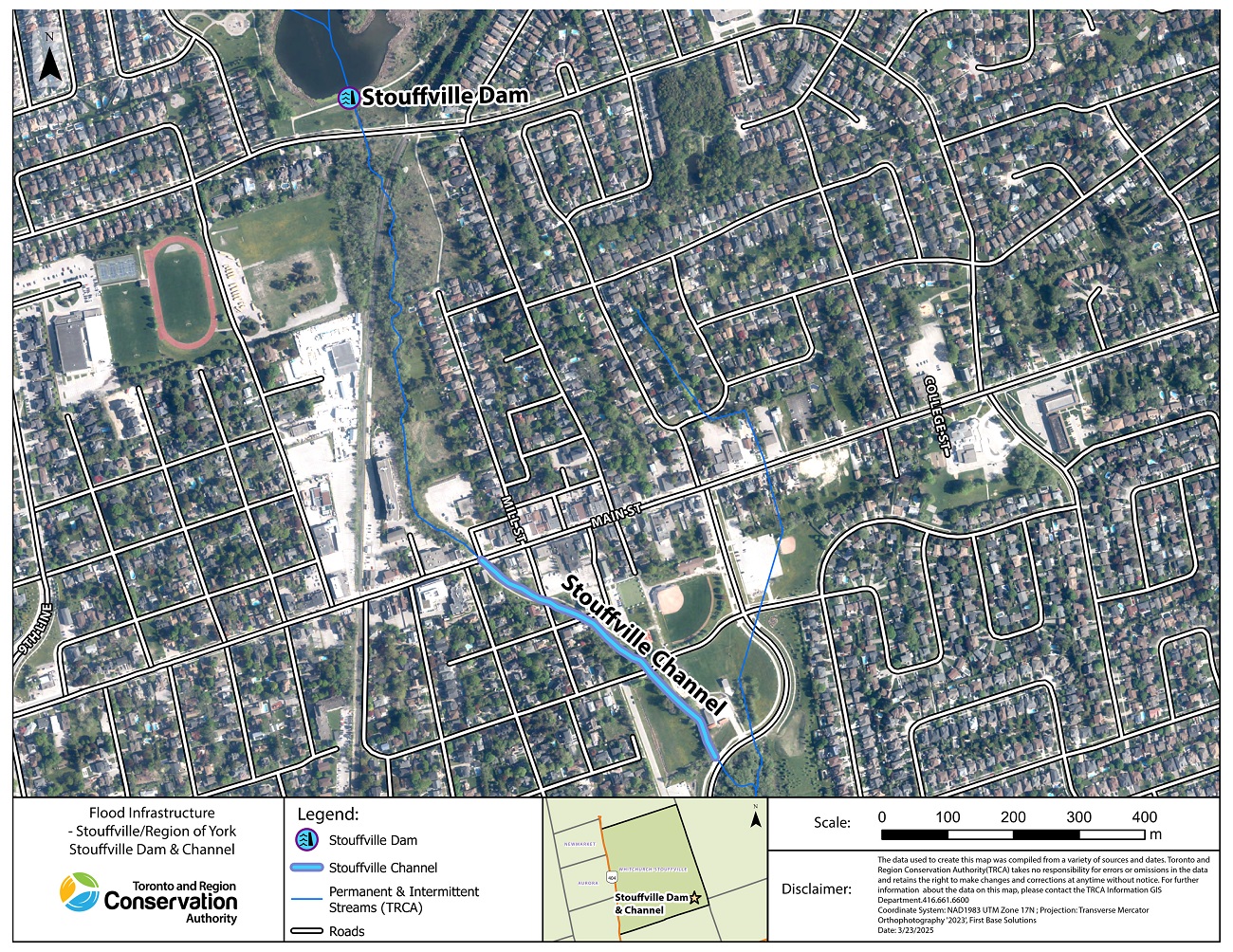
Stouffville Dam and Channel: Map
Select the image below to view the full-sized map.
Stouffville Dam: Quick Facts
- Location: Millard Street to Park Drive, Stouffville
- Date of Construction: 1969
- Status at Dam: The Stouffville Dam is in fair condition and regularly maintained. It is classified as a very high hazard dam, which refers to the potential impact if the dam were to fail. TRCA continues to invest in studies and preventative maintenance to support its long-term safety.
Stouffville Channel: Quick Facts
- Location: The channel begins at Main Street and ends at Burkholder Street, Downtown Stouffville
- Date of Construction: 1980
Why Stouffville Dam Matters
Flood control dams are important structures that help keep communities safe from flooding. They hold back large amounts of water during a storm and release it slowly after the storm passes, ensuring that downstream areas don’t get too much water all at once.
How Do Dams Work?
Flood control dams are large structures built across rivers to block and store water. They stop the water from flowing too fast and store it in a reservoir.
While the presence of Stouffville Dam provides functional flood protection, it can also, like any water-retaining infrastructure, pose an additional flood risk in the event of its failure.
Learn more about TRCA FLOOD CONTROL INFRASTRUCTURE.
Downstream of Stouffville Dam:
Stouffville Flood Control Channel
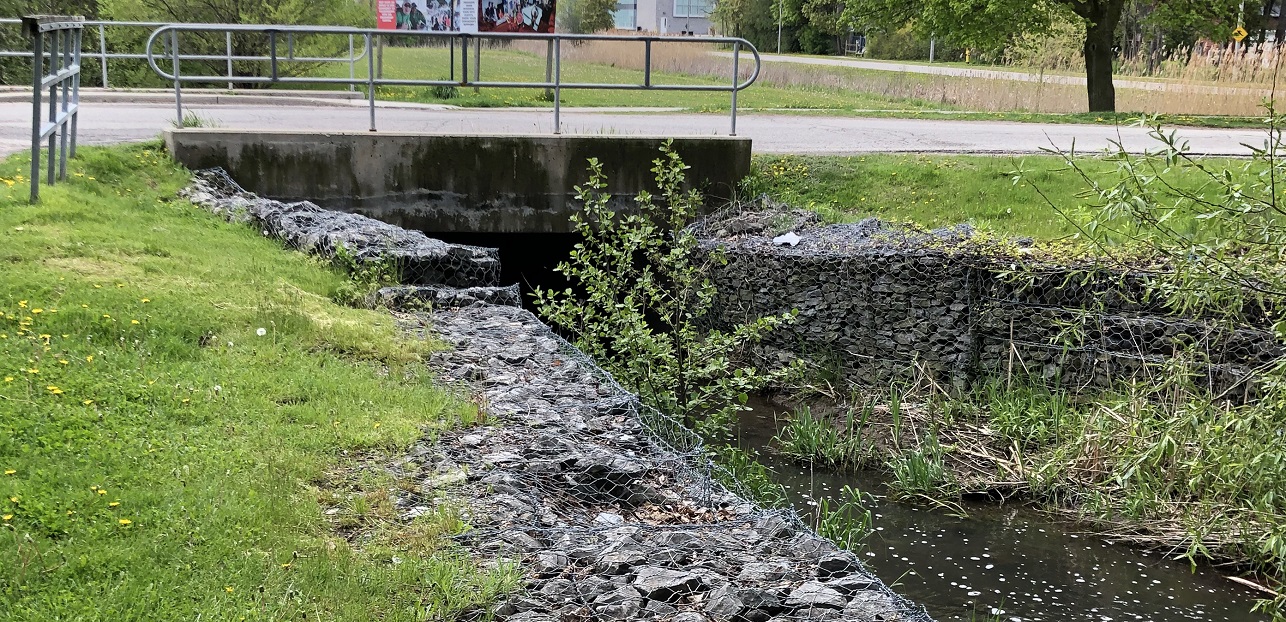
To further protect the Town of Stouffville, TRCA constructed the Stouffville Channel in 1980.
Together, the dam and channel work to control heavy rainfall by capturing excess water in the reservoir and releasing it gradually, reducing the risk of flooding for downstream communities.
Flood control channels increase the amount of water that can flow through them by straightening the watercourse and removing obstacles that may slow the water down.
Learn more about TRCA FLOOD CONTROL INFRASTRUCTURE.
Public Safety
Flood Control Dams and reservoirs can be very dangerous, especially during and after heavy rainfall or snowmelts. The water near them can be deep and fast-moving. It’s important to stay away from dams, channels, and their surrounding areas.
Learn more from TRCA about DAM SAFETY. Find additional information at Ontario Power Generation (OPG) Water Safety.
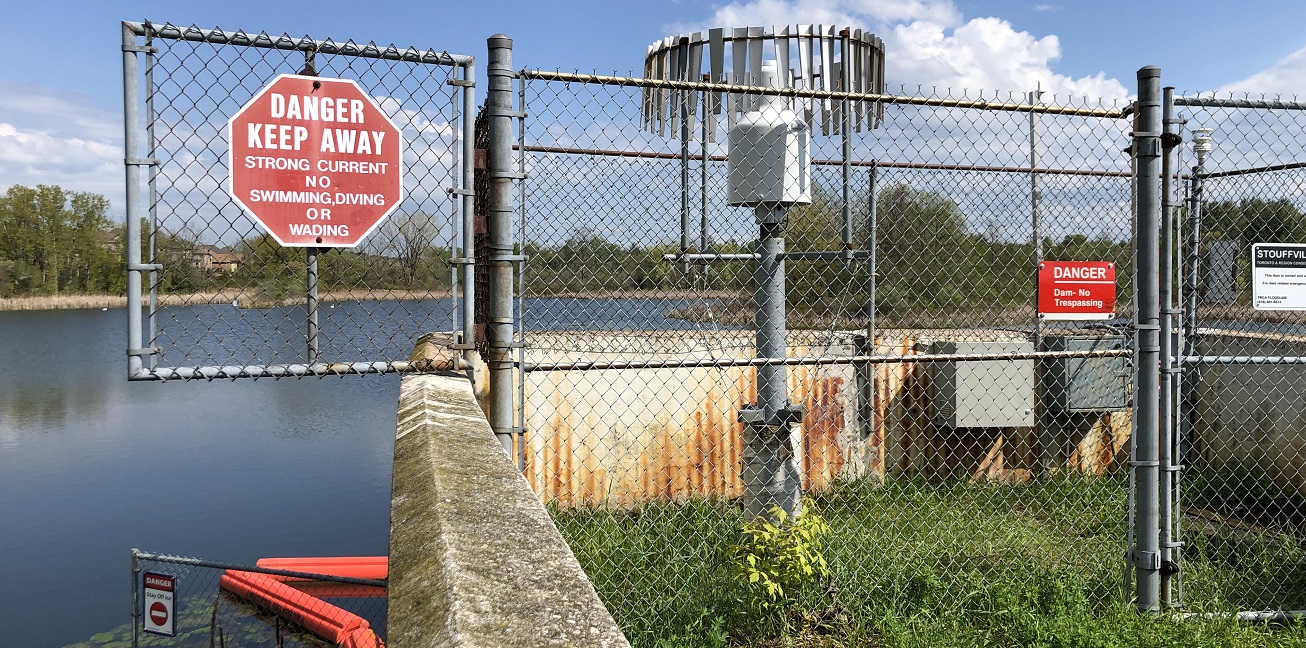
What TRCA is Doing to Improve Dam Safety
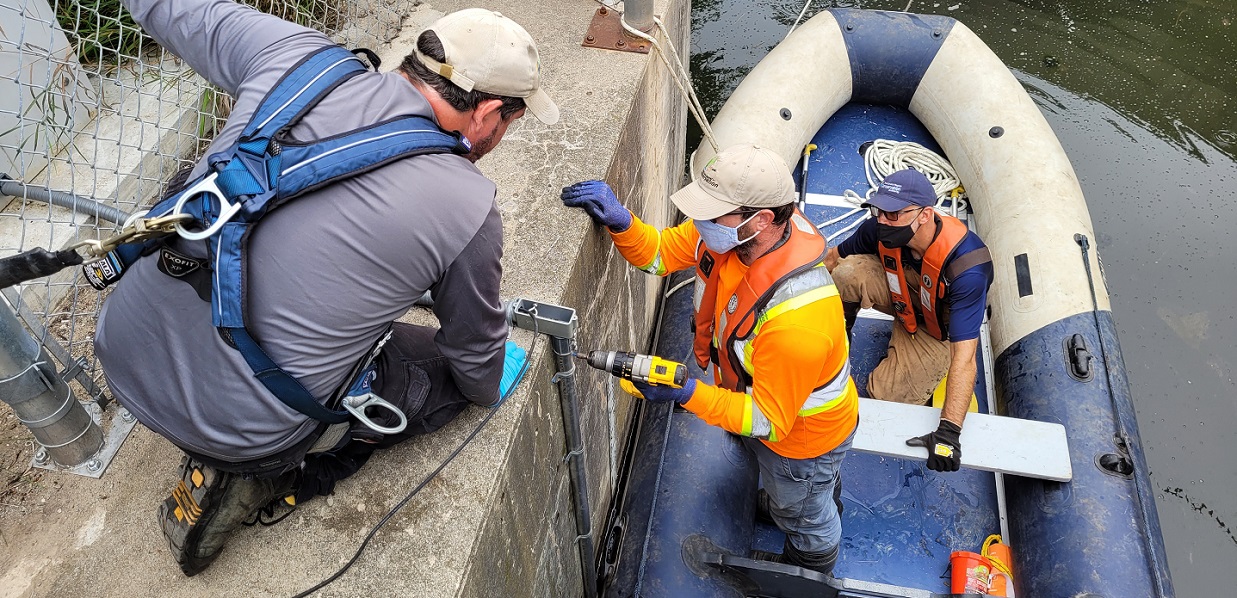
- Regular Inspections: TRCA conducts monthly, quarterly, and annual dam inspections to monitor structural integrity and identify maintenance needs.
- Infrastructure Improvements: Ongoing upgrades to dams and flood related infrastructure help to keep dam conditions safe.
- Improved Communication with Municipal Staff: We’ve improved coordination with local emergency management teams to ensure quick, informed decision-making during an event.
- Dam Emergency Plans: We’ve developed dam emergency plans.
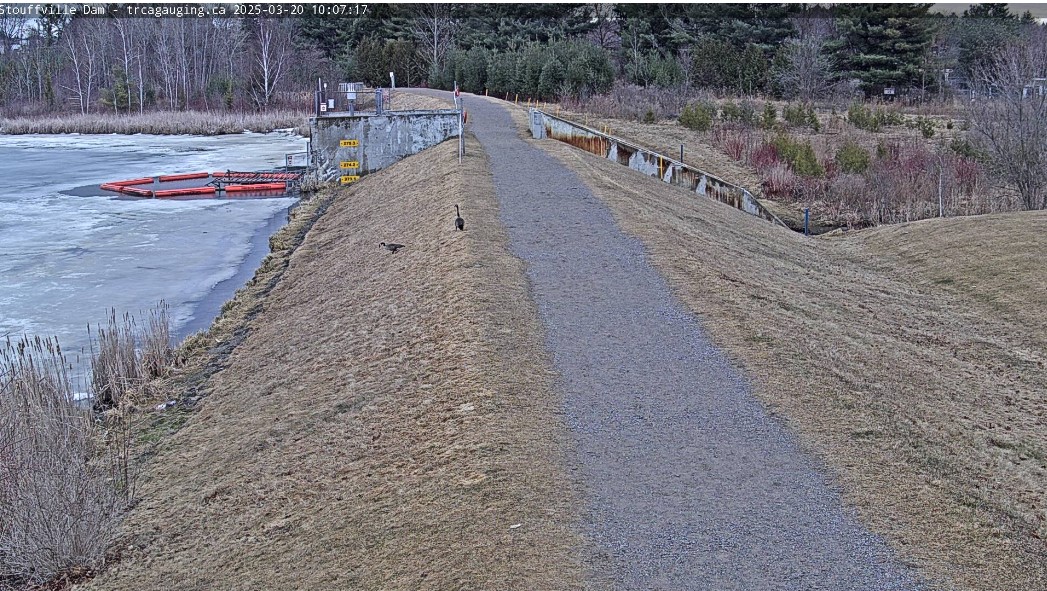
- Additional Monitoring Tools: We installed cameras at key locations to provide real-time monitoring and improve situational awareness during weather events. View trcagauging.ca.
What Types of Flooding Can Affect Residents?
Did you know that there are several types of flooding? Different levels of government are responsible for different types of flooding. To find out who to contact during a flood, see BE PREPARED.
- Riverine flooding occurs when the water levels of rivers rise, overflowing their banks. Reducing riverine flood risk is under the mandate of Conservation Authorities like TRCA.
- Urban or Pluvial flooding consists of street flooding, basement flooding, and flooding of other low-lying areas due to the overflow of local drainage systems. Municipalities are responsible for managing this type of flooding.
Flooding Can Happen at Any Time of Year
 |
WINTER: A rise in the water level or a thaw can break winter ice into large chunks, which can lead to jams behind structures such as bridges, culverts, and crossings. |
 |
SPRING: Rivers and streams can experience high flows in the early spring, as rising temperatures melt the winter’s accumulation of snow, causing water levels to rise. |
 |
SUMMER: Intense, localized downpours from thunderstorms can quickly lead to flooding in smaller creeks. |
 |
FALL: Large wet weather systems, including tropical storms such as Hurricane remnants (like Hurricane Hazel in 1954), can last for several days. Prolonged and heavy precipitation, on top of already saturated soils, can cause rivers to rise. |
How Will I Know If Flooding Is Forecasted?
TRCA operates a Flood Forecasting and Warning Program to support municipal partners during storm events and fulfill responsibilities delegated by the Ontario Ministry of Natural Resources.
The program provides advice on timing and severity of potential flooding, helping protect lives and property while also educating the public about flood risks.
To help residents stay safe, TRCA provides resources and guidance for flood preparedness. Learn what steps to take before, during, and after a flood by exploring our Emergency Management and Safety Resources.

Sign Up for Flood Messages
In order to provide support to our municipal partners during storm events, TRCA runs a Flood Forecasting and Warning Program.
The program provides advice and warning to municipalities for the forecasted timing and severity of potential flooding events from rivers and streams.
Active flood messages from TRCA can be viewed directly in two ways: on our website or on X.
Real-Time Water Level Information
TRCA has dozens of water level gauges on rivers and streams at important locations throughout the Greater Toronto Area as part of its Flood Forecasting and Warning Program.
Explore real-time water levels at at Stouffville Dam, including live camera views, at TRCAgauging.ca/StouffvilleDam.
2. BE PREPARED
When it comes to flood preparedness, everyone – homeowners, landlords, renters, and condo owners – has a role to play. You can take steps to prepare; just select a category below to find out more.
3. STAY INFORMED
Use the following sources to stay informed during a flood:
| • Check your local weather online, or on radio or television before you leave the house. |
| • Check Environment Canada’s public weather alerts |
| • Sign up to receive TRCA flood messages |
| • Check your local municipal and public transit social media links (below). |
Social Media Alerts and Notices

Additional Resources
| • TRCA.ca/Flood |
| • Safety Around Dams |
| • TRCA Flood Forecasting and Warning Centre Page |
| • Ontario Power Generation (OPG) Water Safety |
| • Living Near Dams |
| • Emergency Management Ontario |
| • Ontario’s Emergency Management and Civil Protection Act: Disaster Recovery Assistance for Ontarians |
| • Public Safety Canada: Flood Ready – Tips for overland flooding and first steps to prepare your home |
| • Flood Smart Canada – Created in partnership with the Insurance Bureau of Canada, this resource is designed to help Canadians better prepare for flooding. |
| • Intact Centre on Climate Adaptation: Flood Protection Resources |
| • Institute for Catastrophic Loss Reduction: Flood Resources |
Information About Flood Insurance
| • Visit Insurance Bureau of Canada: Disaster – Water |
Frequently Asked Questions
Where does water going to the dam come from?
- Rainfall and Snowmelt: Precipitation is a major contributor, with rainwater and melting snow running off the land and flowing into rivers, creeks, and streams that feed into the dam reservoir.
- Streams and Tributaries: The dam‘s watershed includes various smaller water channels like creeks and tributaries, which carry water from surrounding areas and flow into the main river or reservoir at the dam.
- Runoff from Urban and Rural Areas: When it rains, water runs off streets, fields, and other surfaces within the watershed. This surface runoff collects and channels into streams and rivers that eventually lead to the dam. This location is near the lower end of the Humber River watershed.
How much impact do hard surface developments and permeable surfaces have on flooding?
Hard surfaces do not allow water to infiltrate, so runoff can be seen on paved surfaces even during small rain storms.
However, larger rain storms can quickly exceed the infiltration capacity of permeable surfaces and create runoff.
One reason Hurricane Hazel had the impact that it did was because there had been a lot of rain in the days before the Hurricane, which meant that the ground had no more capacity to absorb additional water
What do I do and how do I know if there is an emergency at the dam?
- If you are in immediate danger, call 911.
- If emergency officials order an evacuation, follow the instructions provided by the first responders.
- There is no set amount of time given for evacuation because delays in information dissemination can occur. For instance, if someone is not tuned into the TV, radio, or other alert systems, they may not receive an immediate evacuation notice. The best course of action is to evacuate as soon as a notification is received. Evacuations implemented by Whitchurch-Stouffville Fire and Emergency Services should be taken seriously. There may be very little notice to evacuate.
- A TRCA flood duty officer monitors the weather and stream gauges, allowing them to track changing water levels closely. While some storms, like hurricanes, can be anticipated, other events like thunderstorms are much harder to predict, adding to the importance of quick response upon notification.
- Sign up to receive TRCA flood messages.
Contact Information
Questions? Please contact:
TRCA’s Dam Outreach Project Team
Email: Dams@trca.ca