
As parents, we all want to give our kids the best possible start in life, but it’s not always clear what “the best” looks like. For some, it means academic success. For others, it’s confidence, creativity, or just a chance to enjoy being a kid before the schedules and screens take over.
What if there was a school that helped with all of that?
Welcome to The Nature School, run by the Toronto and Region Conservation Authority (TRCA). It’s not your typical classroom, and that’s exactly the point.


So… What Is The Nature School?
In simple terms, The Nature School is an outdoor learning experience where children spend most (if not all) of their day outside. Think of it as a school where nature is the classroom.
Located in beautiful natural spaces across GTA:
- Claireville Conservation Area – Brampton, ON
- Claremont Nature Centre- Pickering, ON
- Kortright Centre for Conservation – Vaughan, ON
- Toronto Zoo – Toronto, ON
The Nature School combines the Ontario Curriculum with inquiry-based learning, where children explore, ask questions, and build confidence by doing things hands-on.
They might be learning math through trail mapping, science through pond exploration, or teamwork through shelter building. While outdoor learning happens in all seasons, comfort and safety always come first with proper clothing, guided activities, and indoor space available during inclement weather.
Why Are More Parents Choosing This?
- Kids are moving. They’re climbing, running, observing wildlife, and building things with their hands and not just sitting at a desk.
- They’re learning by doing. It’s active, experiential education. Kids remember what they learn because they’re immersed in it.
- Confidence and independence grow naturally. There’s something about figuring things out in nature that helps children trust their own instincts.
- It’s not just for “outdoorsy” families. Many students come with no prior hiking or camping experience. They grow into it often quickly.
- It’s real life learning. Weather, group dynamics, risk-taking, problem solving, it’s all part of the experience.
And yes, they’re still following the Ontario Curriculum. The difference is how it’s taught.

Programs for Different Ages
Junior Level – Grades 3 to 6 (ages 8 -11 by Dec 31, 2025)
Primary Level – SK to Grade 3 (ages 5 – 8 by Dec 31, 2025
KPAL (Kindergarten Pals) – JK/SK (ages 4 – 5 by Dec 31, 2025)
Preschool Program – Ages 2.5–5

“But What About Winter?”
This is a fair question, and one of the most common.
Here’s the truth: kids adapt faster than we think. With the right gear (TRCA provides a list), they stay warm, dry, and happy. Many parents are surprised to find that their child ends up loving winter in a way they never did before.
In the event of inclement weather, students always have a private indoor learning space available.
Is It Right for Your Child?
That depends. If your child thrives with movement, curiosity, and space to explore… chances are, they’ll love it.
But even if they’re more reserved or unsure, many families find that The Nature School helps their child come out of their shell in ways a traditional classroom didn’t.
It’s not about raising future biologists (though that happens too). It’s about helping kids connect, with nature, with themselves, and with the world around them.


Ready to Learn More?
If you’re curious about how The Nature School works, the best next step is to visit the official TRCA website and explore the programs. You’ll find registration info, schedules, answers to frequently asked questions, or you can contact us on thenatureschool@trca.ca.
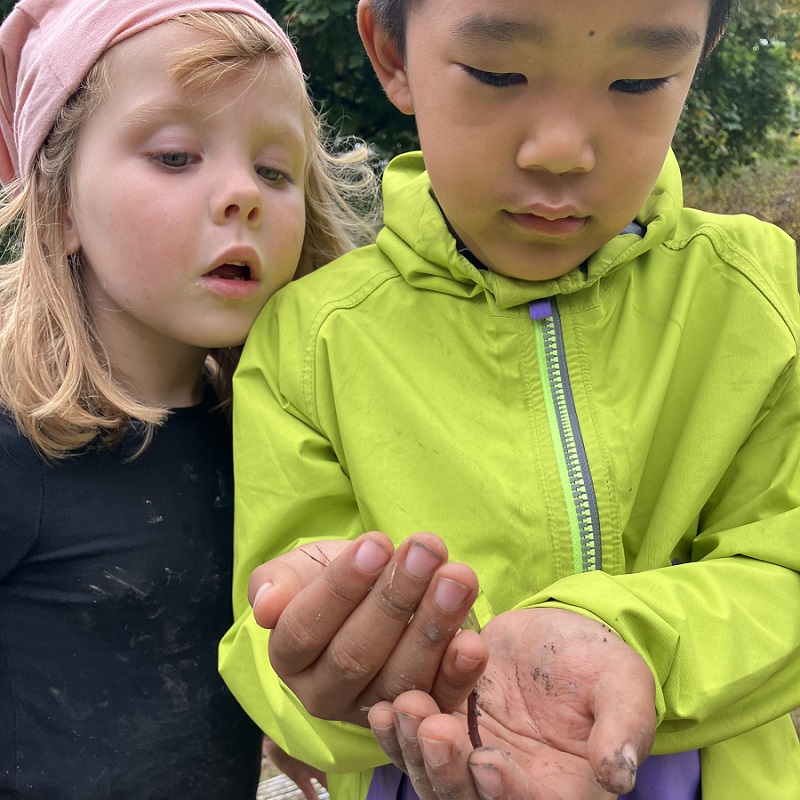
Because sometimes, the best kind of learning doesn’t come from a desk. It comes from a forest trail, a muddy puddle, a shared discovery under a log, and a child saying, “Look what I found!”