
The Carruthers Creek watershed is a relatively small watershed with a drainage area of approximately 3,748 hectares, ranging from 2 to 3 kilometres in width, and only 18 kilometres in length.
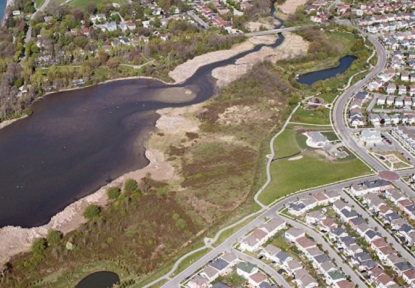
The creek originates south of the Oak Ridges Moraine in Pickering and flows south into Ajax where it empties into Lake Ontario. It is the easternmost watershed in Toronto and Region Conservation Authority’s (TRCA) jurisdiction, located entirely in the Region of Durham.

Carruthers Creek Watershed Plan
The Carruthers Creek Watershed Plan was endorsed by Durham Region on June 23, 2021, and approved by TRCA’s Board of Directors on September 24, 2021. Implementation of the watershed plan is now underway.
Explore the Watershed
Explore the quick links and map below to learn more about the Carruthers Creek watershed:
Cultural Heritage
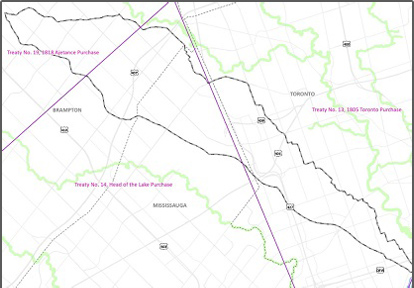
The lands and waters in the Carruthers Creek watershed are the Traditional Territories and Treaty Lands of the Williams Treaties First Nations, which includes the Anishinaabe Chippewa of Simcoe (communities of Beausoleil, Georgina Island and Rama), and the Anishinaabe Mississauga (Michi Saagiig) of the north shore of Lake Ontario (communities of Alderville, Curve Lake, Hiawatha, and Scugog Island).
The lands and waters are also the Traditional Territory of the Wendat Nation, and are now home to many diverse First Nations, Inuit, and Métis peoples.
Through work with lands and waters, TRCA appreciates and respects the history and diversity of these lands and is grateful to have the opportunity to work and be in relation with this territory. We are also grateful for the continued work of many First Nations and Indigenous peoples, who are the original and current caretakers of these lands and waters. We humbly acknowledge our responsibility to respect First Nations’ rights and Indigenous perspectives, elevate Indigenous voices, and honour our relationship with First Nations and Indigenous peoples.
Land Use & Climate
Overall, the land use in this small watershed is in transition.
The watershed is mostly rural north of Highway 7. From Highway 7 south to Taunton Road, most lands are in the Protected Countryside of the provincial Greenbelt. From Taunton Road south to the lakeshore, the area is mainly low to medium density suburban neighbourhoods.
In 2019, natural areas covered about a quarter (25%) of the watershed. About 30% of the land was classified as rural and 45% as urban (as of 2019).
Farming differs between the upper and middle parts of the watershed. These differences may be due to land ownership, drainage and soil conditions, or a mix of these factors.
In the east branch, farming is mostly horticulture, whereas in the west branch farmers mainly grow cash crops.
In the urban areas of Ajax, some lands planned for future development are still being used to grow cash crops.
KEY CHARACTERISTICS
- AREA: The watershed covers a drainage area of approximately 3,748 hectares and is urbanizing. It includes four subwatersheds: Central, Northeast, Northwest, and South.
- POPULATION: 54,951 (Projection based on 2021 census data)
- LAND USE: The watershed is about 45% urban, 30% rural, and 25% natural, as of 2019; it continues to urbanize with losses of both natural cover and rural cover.
- IMPERVIOUS COVER: About 24% of the watershed is impervious and covered by roads, buildings, and driveways, with development concentrated primarily in the central and southern portions of the watershed.
CLIMATE
Climate change impacts are being seen and felt locally in TRCA’s jurisdiction. Extreme heat and heavy rains are leading to more heat advisories and flooding, which affect the health and safety of the watershed and its residents.
These impacts will get worse unless we act to reduce the effects of greenhouse gas emissions. We also need to find ways to help our watersheds and communities better handle the effects of climate change.
Climate trends in the Toronto region are based on an analysis of climate parameters for the historical climate period between 1971 to 2000, and include:
- Temperatures are projected to increase across all seasons throughout the year.
- The number of very hot days above 30°C and 35°C are expected to increase.
- Very cold days below -10°C and -20°C are expected to decrease.
- Total annual precipitation is expected to increase.
- More frequent and intense storms are expected to occur.

Natural Hazards
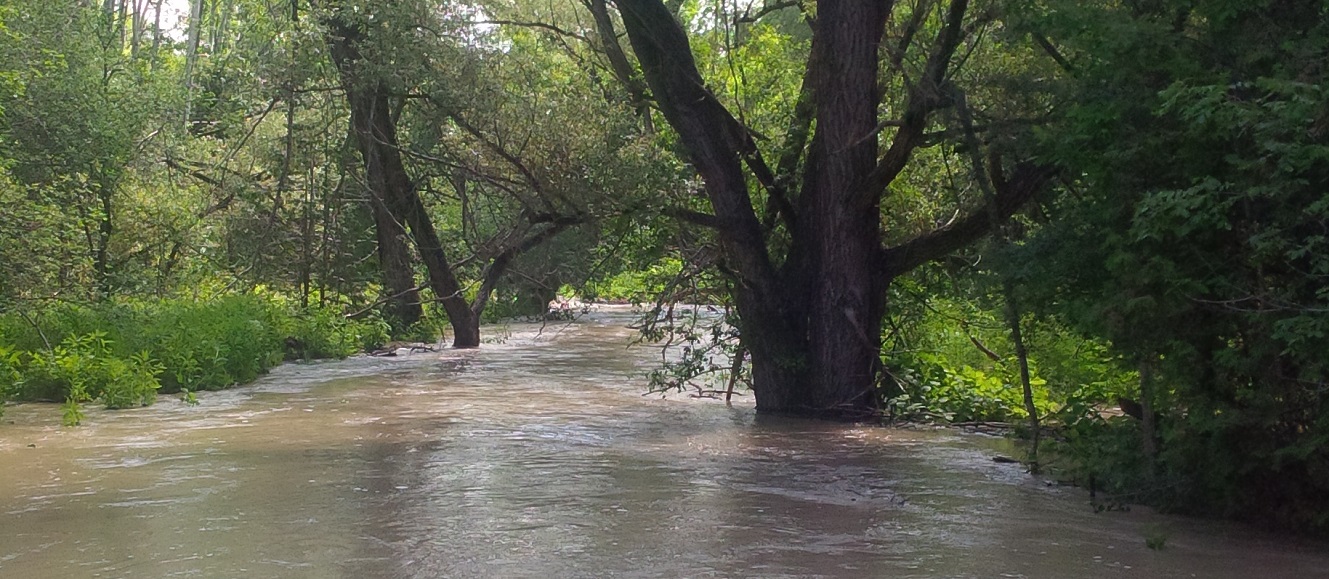
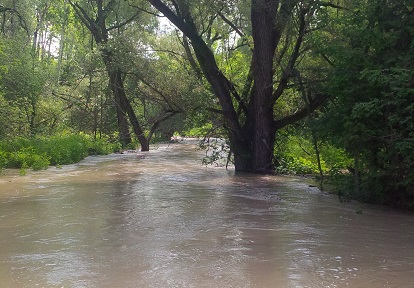
Climate change is expected to increase precipitation, raise annual average temperatures, and heighten the frequency of extreme weather events, all of which can contribute to increased flooding and erosion in developed areas of Carruthers Creek.
There is one Flood Vulnerable Cluster (FVC) in the Pickering Beach neighbourhood of Ajax. FVCs are areas where a higher number of roads and buildings are at greater risk of flooding and damage.
As of 2003, approximately 64% of the developed portion of the watershed has stormwater controls that meet TRCA criteria, while 29% have no stormwater controls and 7% have water quantity control only.
Unsustainable development will further reduce the watershed’s resilience to extreme weather events and result in flooding and erosion.
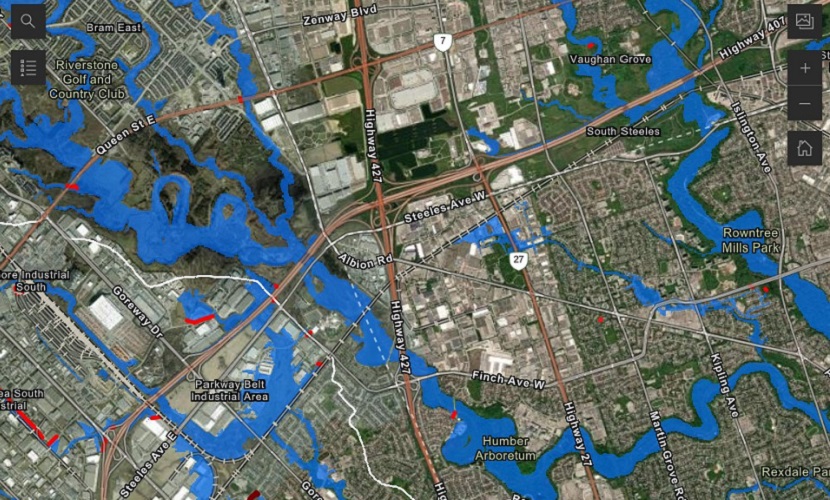
Is your home or community in a flood risk area?
Natural Heritage and Urban Forest
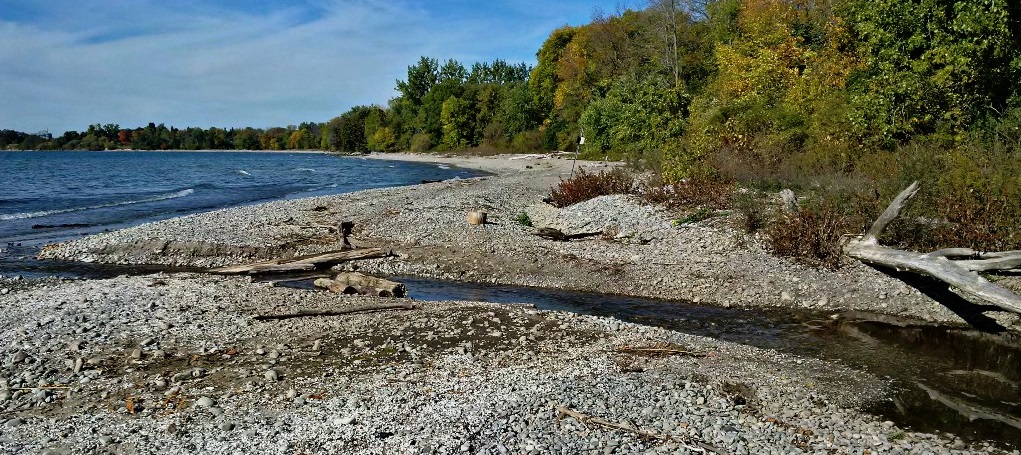
A healthy natural heritage system that can resist harmful changes and recover from damage is important for the health and safety of ecosystems and people.
It helps to reduce the impacts of changing land use and climate, supports different types of plants and animals, and offers many services to people, such as better protection from floods and erosion, clean drinking water and air, and more opportunities for recreation.
In the Carruthers Creek watershed, there is not enough natural cover, or good quality habitat, needed to maintain ecosystem resilience (i.e., capacity to respond to change) due to changing land use patterns and climate change.
Current habitat conditions are overall “poor” in terms of patch size, shape, and influences from surrounding land uses.
Even with optimal enhancements to natural cover, the watershed remains below recommended federal guidelines for natural cover quantity, as well as TRCA’s terrestrial Natural Heritage System target (2022).
However, any increase in natural cover would benefit biodiversity and enhance ecosystem services. With very limited natural cover, urban forests are extremely important for supporting healthy natural heritage in this watershed.
There are opportunities to improve both the quantity and quality of the urban forest. Enhancing urban forests can provide valuable ecosystem goods and services, improve climate resilience, and offer socio-economic benefits.
View TRCA’s Urban Forest, Natural Cover, and Forest Cover StoryMap to learn more.
KEY CHARACTERISTICS
- NATURAL COVER: Currently, about 22% of the watershed consists of natural cover but is still below the recommended minimum federal target of 30% for long-term sustainability and resilience.
- URBAN FORESTS: In 2017, approximately 23% of the watershed was covered by tree and shrub canopy. The urban forest has 94 different kinds of trees and shrubs, with maples being the most common.
- BIODIVERSITY: Based on limited inventory surveys, 133 wildlife and 845 plant species have been identified in the watershed, with 18% of the plants found to be Regional Species of Conservation Concern. This indicates that the watershed has the capacity to support a variety of species, though sensitive species are primarily found outside of the urban areas. Enhancing habitat quantity, quality, and connectivity would help support these species across the watershed.
- INVASIVE SPECIES: There is a significant presence of invasive species, such as dog-strangling vine, garlic mustard, invasive phragmites, and common buckthorn, representing 43% of the plants inventoried.
ECOLOGICAL SIGNIFICANCE
- There are two provincial Areas of Natural and Scientific Interest (ANSl), as designated by the Ontario Ministry of Natural Resources, in the watershed:
- The Kinsale Raised Shoreline Earth Science ANSI, designated for its distinct geological character as a well-preserved part of the ancient Lake Iroquois shoreline.
- The Shoal Point Marsh Life Science ANSI, which is included in the coastal Carruthers Creek Wetland Complex Provincially Significant Wetland.
- Two smaller wetlands are evaluated as Locally Significant: the Rossland Road Wetland Complex and the Salem Road Wetland Complex.
- The Carruthers Creek Wetland Complex is divided into two Environmentally Significant Areas: the coastal Carruthers Marsh and the Carruthers Creek Forest, a few hundred metres inland.
Water Resources
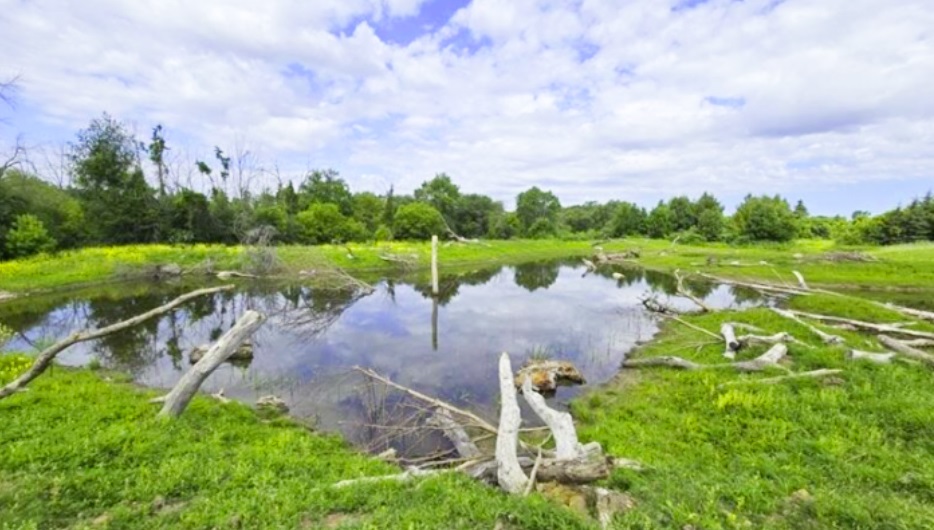
The water resources in the Carruthers Creek River watershed are made up of an interconnected system of groundwater and surface water.
This includes streams, rivers, lakes, and wetlands, as well as underground aquifers and areas that help replenish them. It also includes water-related processes and functions, like the flow of water above and underground.
The water resource system provides homes to various fish species and insects, which are important for the health of the ecosystem.
A healthy water resource system helps keep our watersheds safe and resilient. It provides key services to our communities, such as storing water to reduce flooding, filtering water to keep it clean, and providing habitats for wildlife, such as fish, that in turn support recreational activities.
In the Carruthers Creek watershed, the aquatic ecosystem is classified as sensitive and close to its limit for handling impacts from land development and climate change, and needs additional habitat restoration and conservation actions to improve conditions.
About 67% of the small streams and headwater drainage features north of Highway 7 have been altered by human activities, mainly through agricultural tile drainage. These changes can disrupt the natural flow of water and lead to more runoff across the landscape.
KEY CHARACTERISTICS
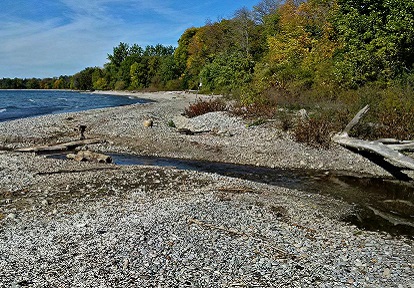
- SOURCE WATER: The headwaters of Carruthers Creek form to the south of the Oak Ridges Moraine, in Pickering. Both the east and west branches of the creek originate north of Concession 8, and they join immediately north of Taunton Road. The Creek enters Lake Ontario in Ajax.
- GROUNDWATER: There are three aquifer systems present in the watershed. These aquifer systems include the Oak Ridges Moraine/Mackinaw Interstadial, Thorncliffe, and Scarborough aquifer complexes. Long-term groundwater quality information for specific sites within the Carruthers Creek watershed are unavailable, but there have been a few studies conducted in adjacent watersheds that show elevated levels of nitrates and chlorides in groundwater attributed to road salts and fertilizer use.
- FEATURES & AREAS: Carruthers Creek contains a total of 61 kilometres of stream channels.
BIODIVERSITY
- 21 fish species were found within the watershed during long-term fisheries surveys. Fish in the watershed mainly consist of coolwater native species, including the provincially endangered species Redside Dace.
- Historically, portions of the watershed would have supported coldwater fish populations including Brook Trout, Atlantic Salmon, Slimy Sculpin, and Mottled Sculpin.
- The average habitat rating for fish communities in the watershed is “fair”, while benthic invertebrate communities are rated as “fairly poor” to “poor”. As urbanization increases, more sensitive fish species are likely to be replaced by disturbance-tolerant species, and benthic communities are expected to shift toward more pollution-tolerant species.
ISSUES OF CONCERN
- IMPERVIOUS SURFACES: The impervious surface in the watershed (approximately 22%) disrupts the natural flow of water and alters both water temperature and quality. These changes degrade aquatic habitats and negatively affect aquatic species and ecosystems. Federal guidance recommends urbanizing watersheds maintain less than 10% impervious land cover, while already degraded urban systems should not exceed a second threshold of 25% to 30%.
- INSTREAM BARRIERS AND RIPARIAN HEALTH: Instream barriers to fish movement in the watershed adversely impact the aquatic system by limiting access to feeding and spawning areas, increasing water temperature, and affecting sediment transport. In addition, some instream structures increase water velocities to the point where fish passage is prevented. Instream structures that act as barriers to fish passage include dams, weirs, road and rail crossings, and some culverts.
Water Quality
Clean water is essential for the health and safety of a watershed, its residents, and ecosystems.
It is important not only for drinking, household use, and recreational activities like swimming and fishing, but also for economic activities such as agriculture and manufacturing.
TRCA’s Regional Watershed Monitoring Program currently monitors water quality monthly at two stations within the Carruthers Creek watershed.

Data from both stations from June 2015 to May 2016 were used to determine current conditions and found that water quality in the Carruthers Creek watershed is impaired (i.e. degraded), requiring improvements to stormwater management.
The headwaters of Carruthers Creek contain elevated concentrations of total phosphorus, phosphate, total ammonia, E. coli, total suspended solids, turbidity, and some trace metals.
These elevated concentrations in the headwaters were likely influenced by agricultural practices and the construction of Highway 407.
Chloride levels regularly exceeded the threshold for the protection of aquatic life in the reaches of Carruthers Creek with urban influences. Additionally, increased concentrations of total ammonia, nitrite, phosphate, turbidity, and trace metals are often observed downstream of the urban area.
As expected, the concentrations of many water quality parameters were elevated during high flow conditions that occur during storm runoff and wet weather.
KEY CHARACTERISTICS
- CHLORIDES (e.g., from road salt): Averages regularly exceeded the Canadian Water Quality Guidelines (chronic) for the Protection of Aquatic Life in the reaches of Carruthers Creek with urban influences.
- TOTAL SUSPENDED SOLIDS (e.g., particles from soil and pavement erosion): Monitoring results show large fluctuations in Total Suspended Solids (TSS) in Carruthers Creek.
- TOTAL PHOSPHORUS (e.g., from fertilizers, animal wastes, and sanitary sewage): Averages for Carruthers Creek exceed the Provincial Water Quality Objective. To avoid excessive plant growth in river and stream, concentrations must remain below 0.03 mg/L.
- E. coli BACTERIA (e.g., from sewage and animal waste): Averages for Carruthers Creek exceed the Provincial Water Quality Objective.
Contact
Questions about the Carruthers Creek watershed? Contact carruthers@trca.ca.