
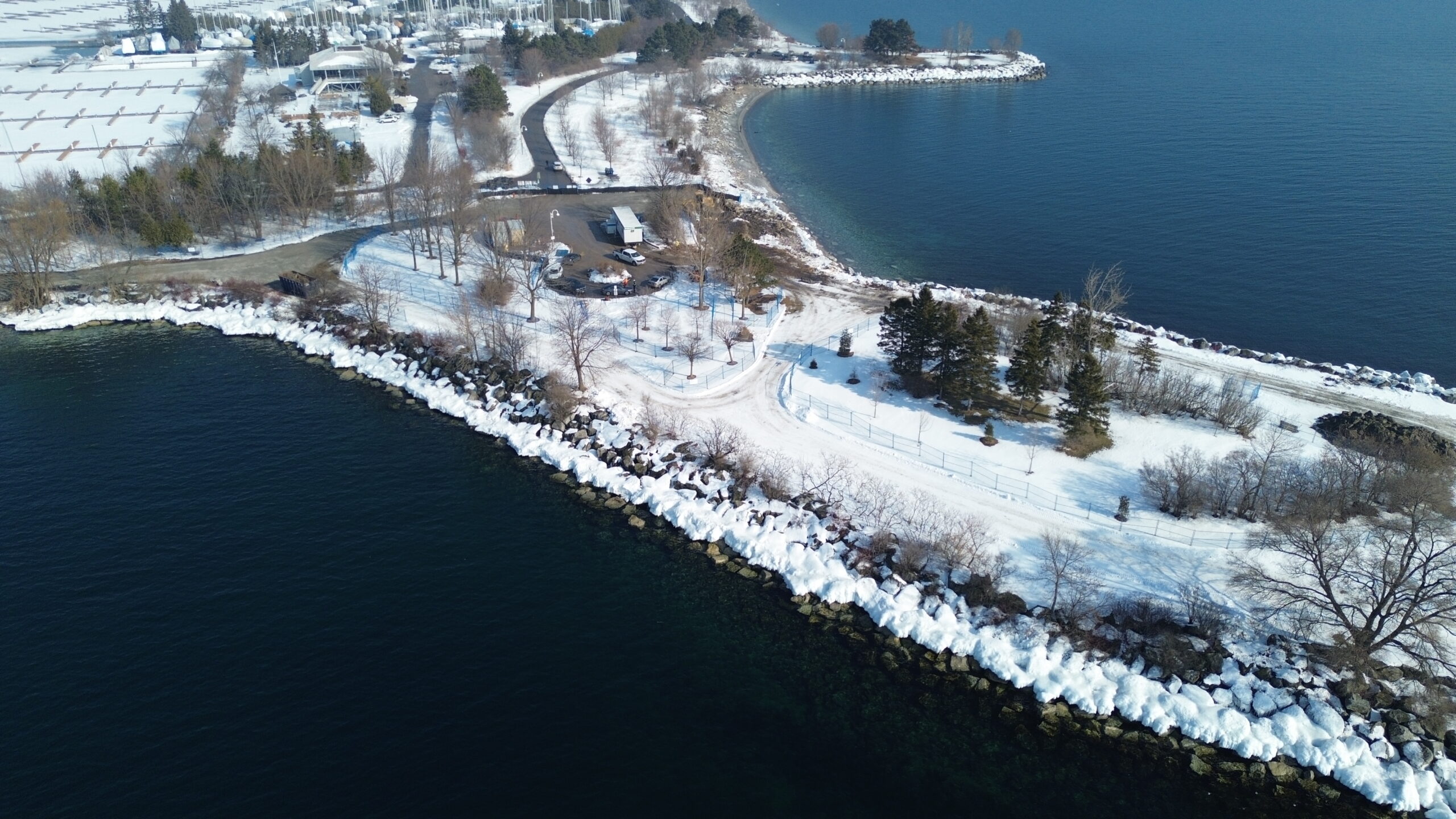
Toronto and Region Conservation Authority (TRCA), in partnership with the City of Toronto, is undertaking maintenance works on existing shoreline erosion control structures along Lake Ontario within Humber Bay Park West.
This work will protect against the hazards of shoreline erosion and address public safety concerns.
STAY INFORMED
Phase 1 construction, including the Dogs Off-Leash Area (DOLA) and south beach, is complete and open to the public. Some restored areas (i.e. topsoiled and seeded) will remain temporarily fenced off to allow the grass to establish.
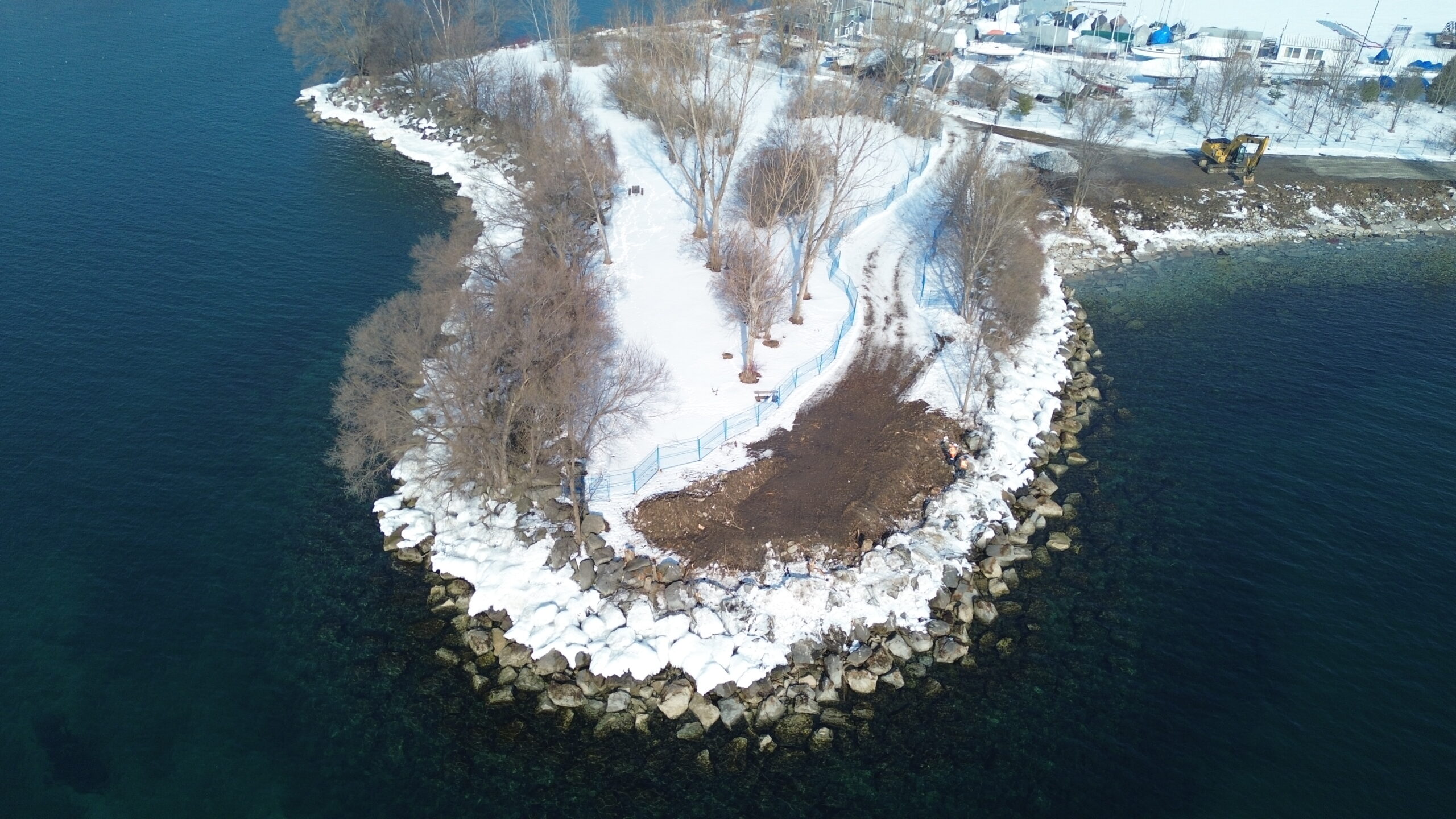
Phase 2 construction commenced in June 2026, with expected completion in Fall 2026. This phase includes reconstruction of the Etobicoke Point headland and pebble placement on the central beach.
Regular progress updates will be provided in the Construction Updates section. Please reach out to the project manager if you have any questions.
Learn More About the Project




Project Location
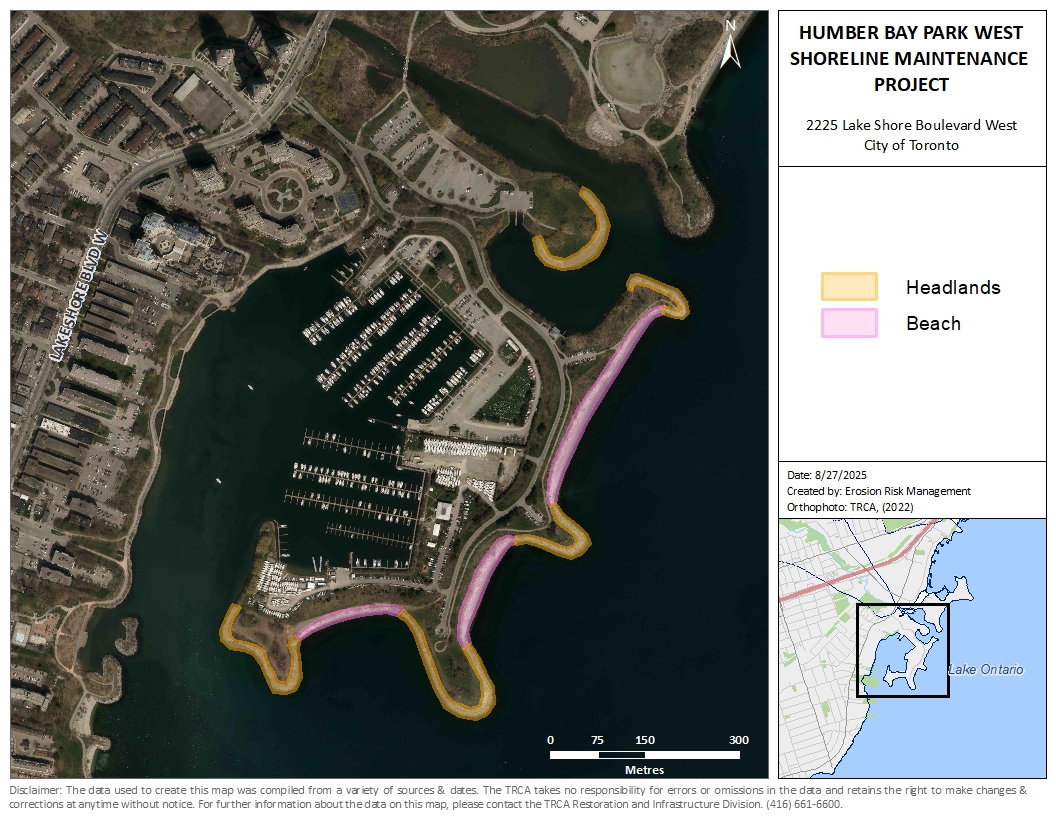
The project area is in Humber Bay Park West, south of Lake Shore Boulevard West, at the mouth of Mimico Creek in the City of Toronto.
The areas of concern include five armourstone headlands and three rubble beaches which make up most of the park’s shoreline.
Project Background

Humber Bay Park West Park was built in the 1970s and 1980s with excavated materials and rubble surplus from construction projects. The park features a series of erosion control structures to protect the shoreline.
The shoreline erosion control structures within the project area have been monitored annually since 2006 as part of TRCA’s Erosion Risk Management Program (ERMP). Eight structures are planned for maintenance.
Severe weather events, including record high lake levels in 2017 and 2019, as well as severe winds from the April 2018 storm event, have accelerated the deteriorating condition of these structures.
Most of the structures are considered to be in failing or failed condition and require major maintenance to return them to a state of good repair.
Existing Concrete/Construction Rubble Beaches
There are three concrete/construction rubble beaches of concern. A significant amount of the original material has washed away, exposing the backshore to erosion from wind and wave activity.
At two of these beaches, the erosion scour is encroaching on park paths, posing a public safety risk.


Existing Armourstone Headlands
There are also five armourstone headlands of concern. All five structures have experienced erosion and the displacement of armourstone material to varying degrees.
For some headlands, erosion is encroaching on paths placing public safety at risk, particularly within transition areas between beaches and headlands.


TRCA retained professional coastal engineering consultant GHD to develop detailed designs for repair of the existing erosion control structures in order to address ongoing erosion and safety hazards.
Final detailed designs were received in December 2025.
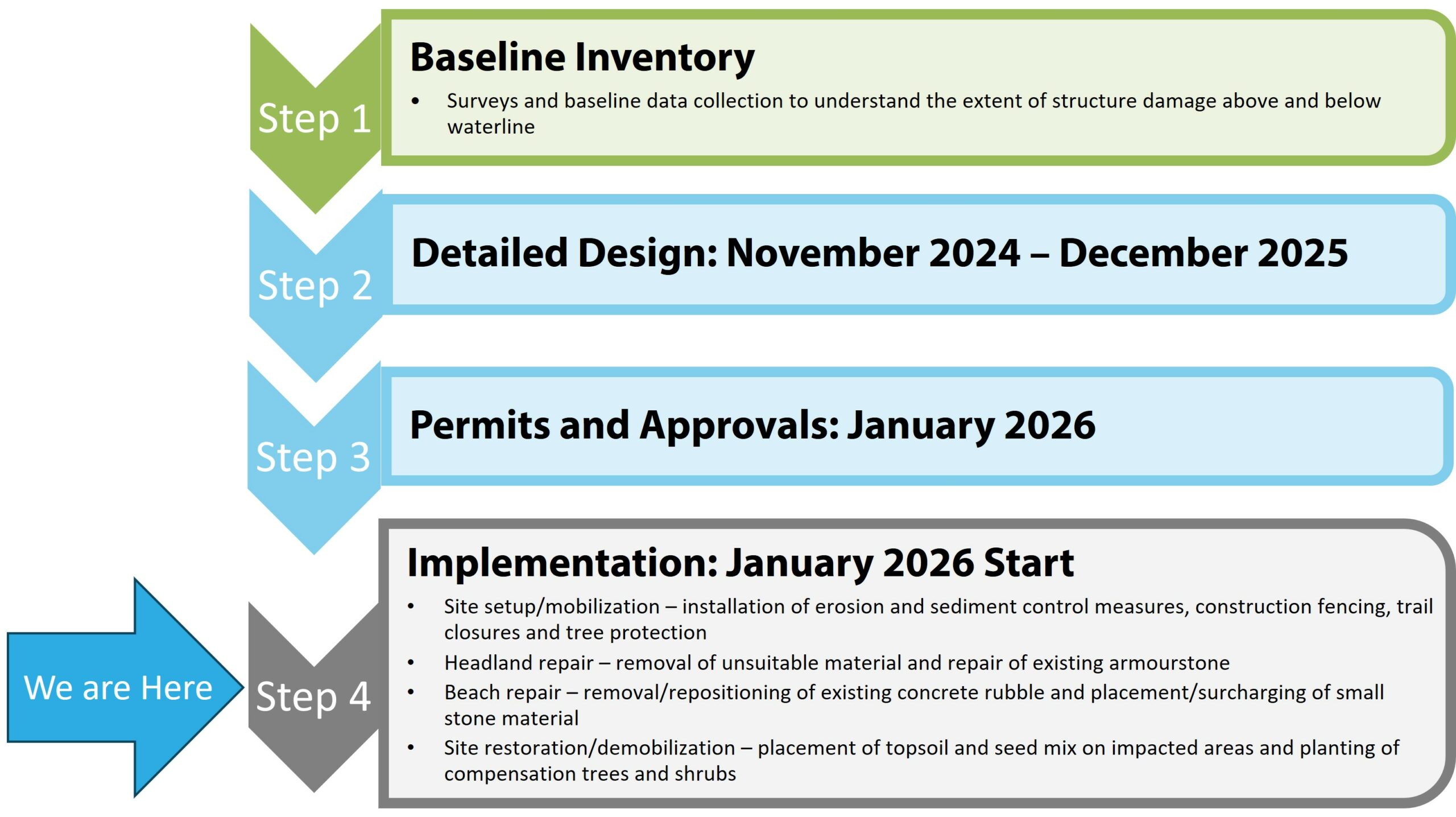
Repair works will include maintenance to the headlands, which will involve the addition of armourstone and in some cases extension of the headlands to better protect the transition areas.
The extent of headland maintenance will vary based on current site conditions and wave action in that particular area.
Beach maintenance will include surcharging with fine to coarse pebble material to maintain a balance between shoreline resiliency and recreational function.
Scope of Work
Public Notices and Events
Drop-In Information Session
Wednesday, February 12, 2025
VIEW THE INFORMATION SESSION PANELS.
Drop-In Information Session
Tuesday, September 30, 2025
VIEW THE INFORMATION SESSION PANELS.
Notice of Construction
Updated Notice of Construction signage placed in Humber Bay Park West upon completion of Phase 1.
VIEW THE UPDATED PHASE 1 & 2 NOPC SIGN.
Original Notice of Construction placed in Humber Bay Park West prior to construction.
VIEW THE NOPC SIGN.
Public Notice of Minor Works (Transport Canada)
TRCA has issued a Public Notice of Minor Works in accordance with Transport Canada’s Navigation Protection Program (NPP) notification requirements.
VIEW THE NPP MINOR WORKS PUBLIC NOTICE.
Construction Updates
Phase 1 construction is complete and open to the public. Some restored areas (i.e. topsoiled and seeded) will remain temporarily fenced off to allow the grass to establish.
Phase 2 construction is in progress.
Regular construction progress updates will be provided throughout the project.
September 21, 2026
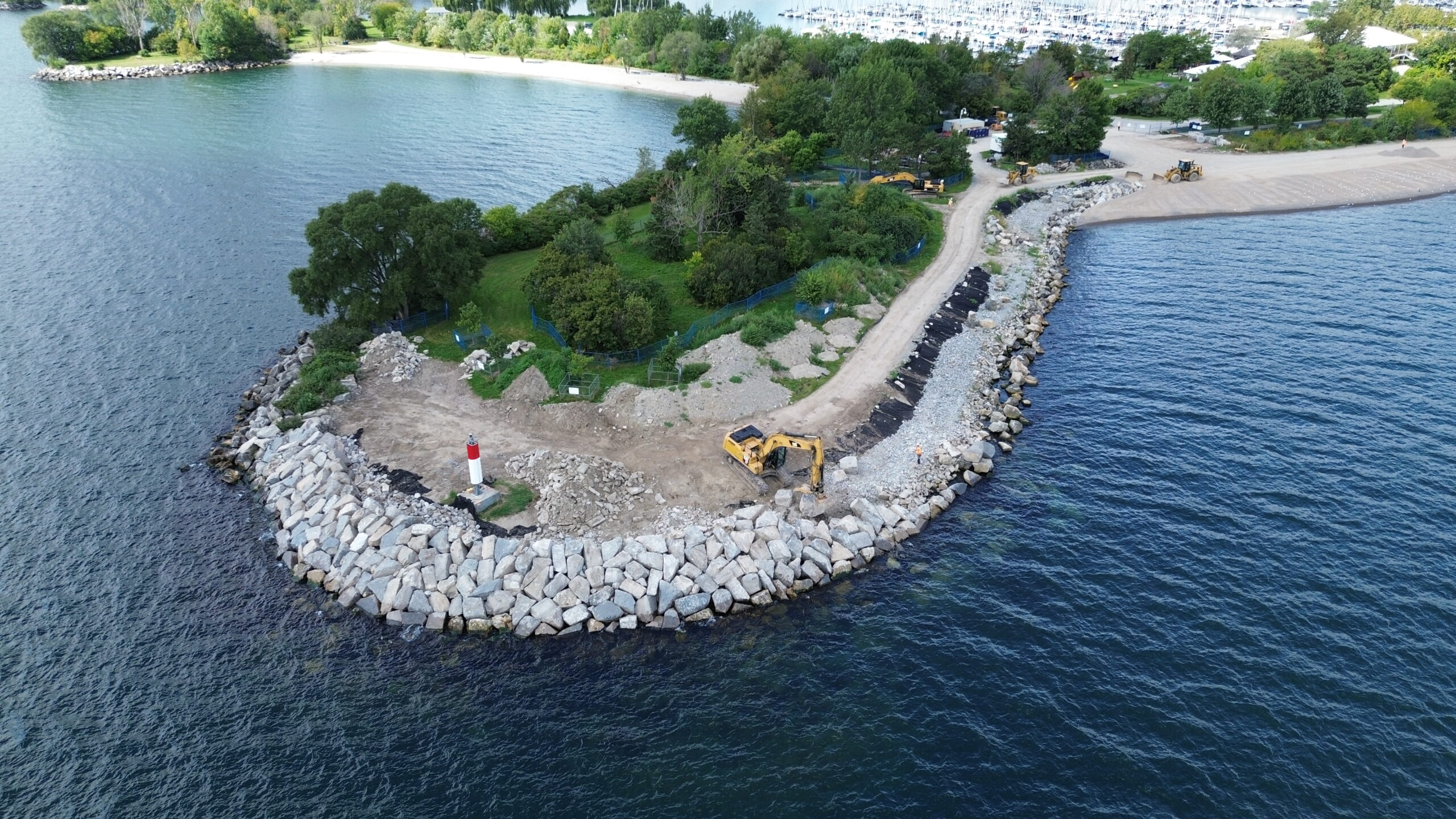
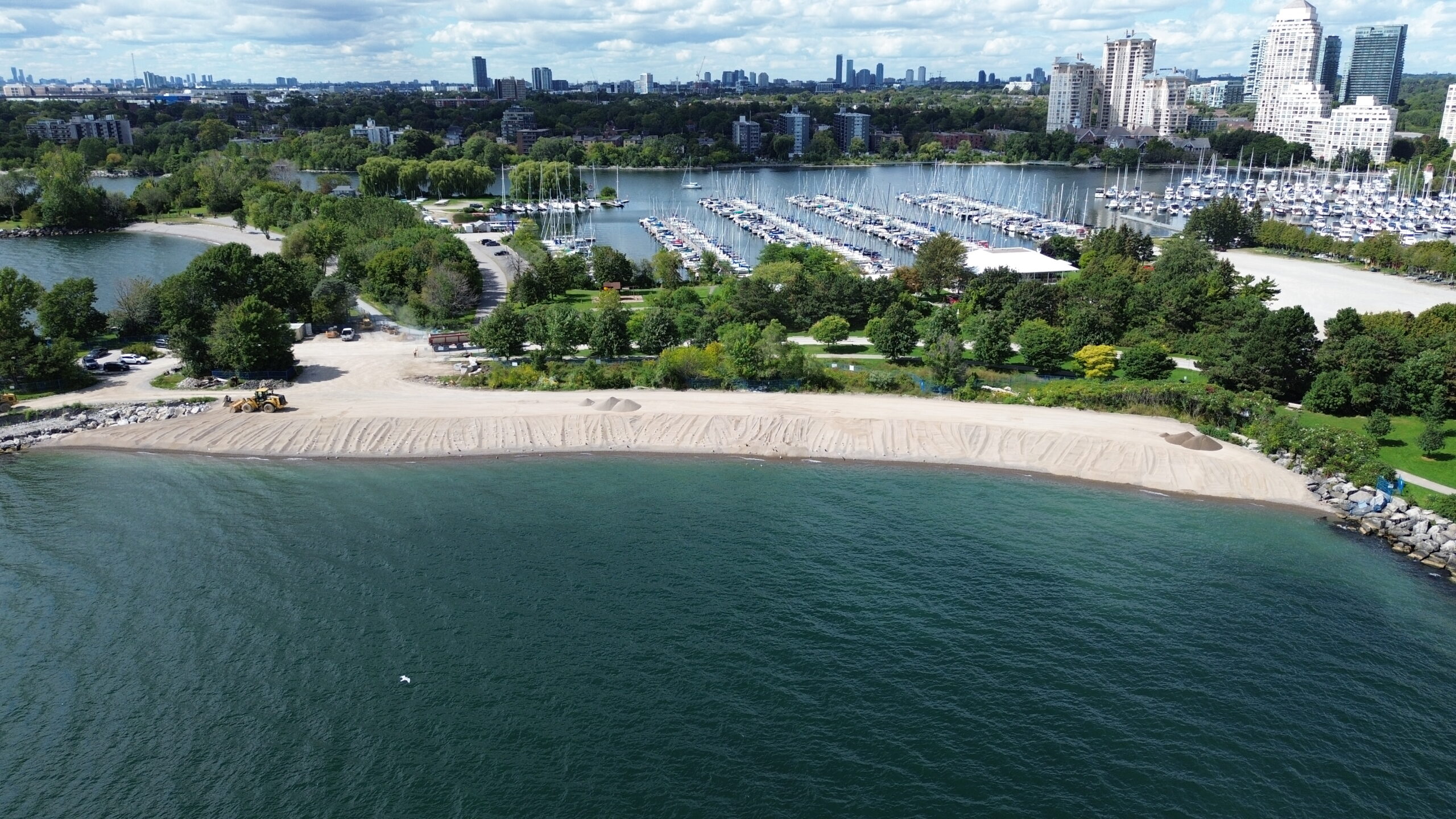
- Pebble material placement continues along the central beach
- Armourstone placement continues along the revetment
August 18, 2026
- Pebble material placement continues along the central beach
- Armourstone placement has commenced along the toe of the revetment
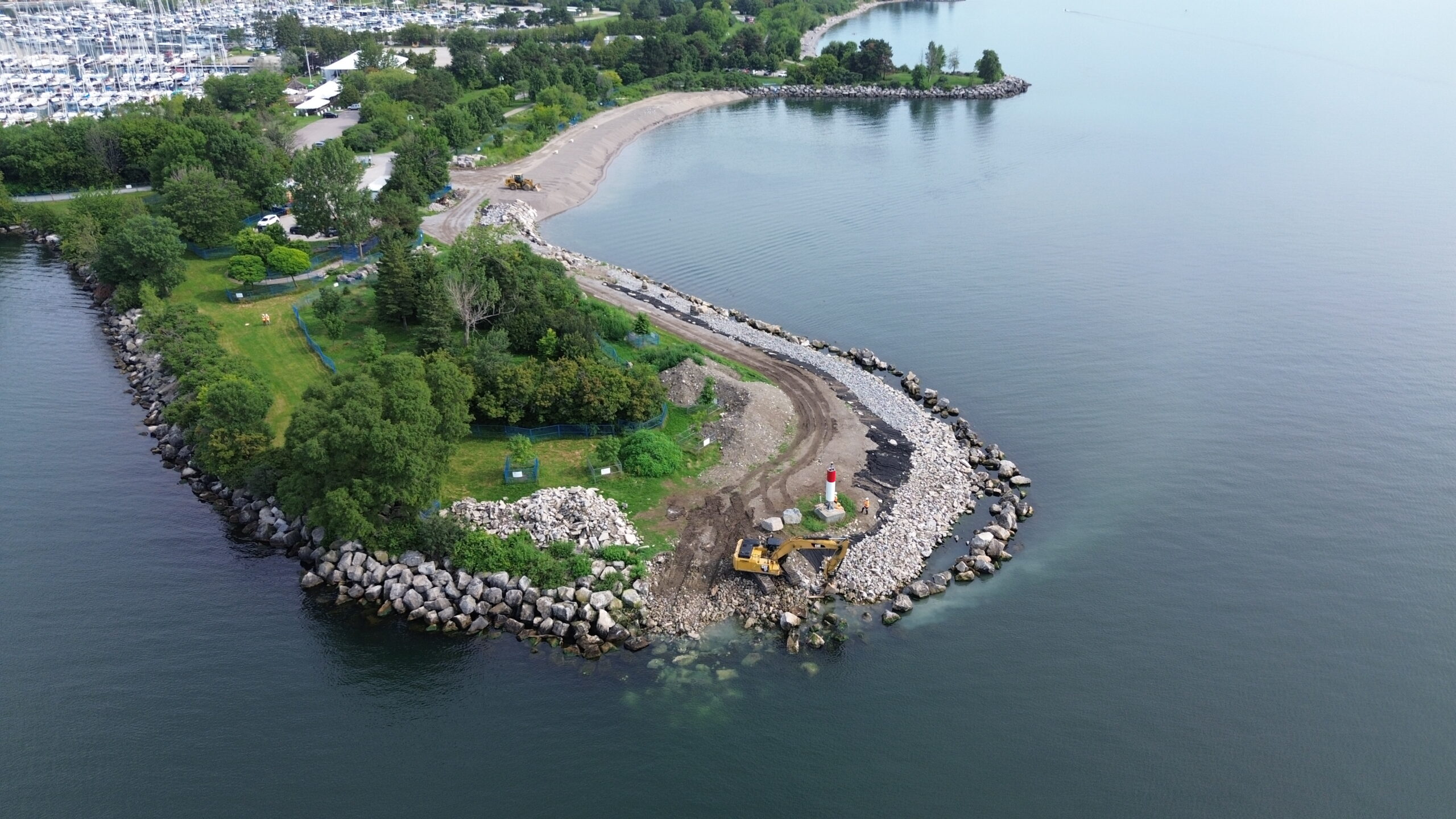
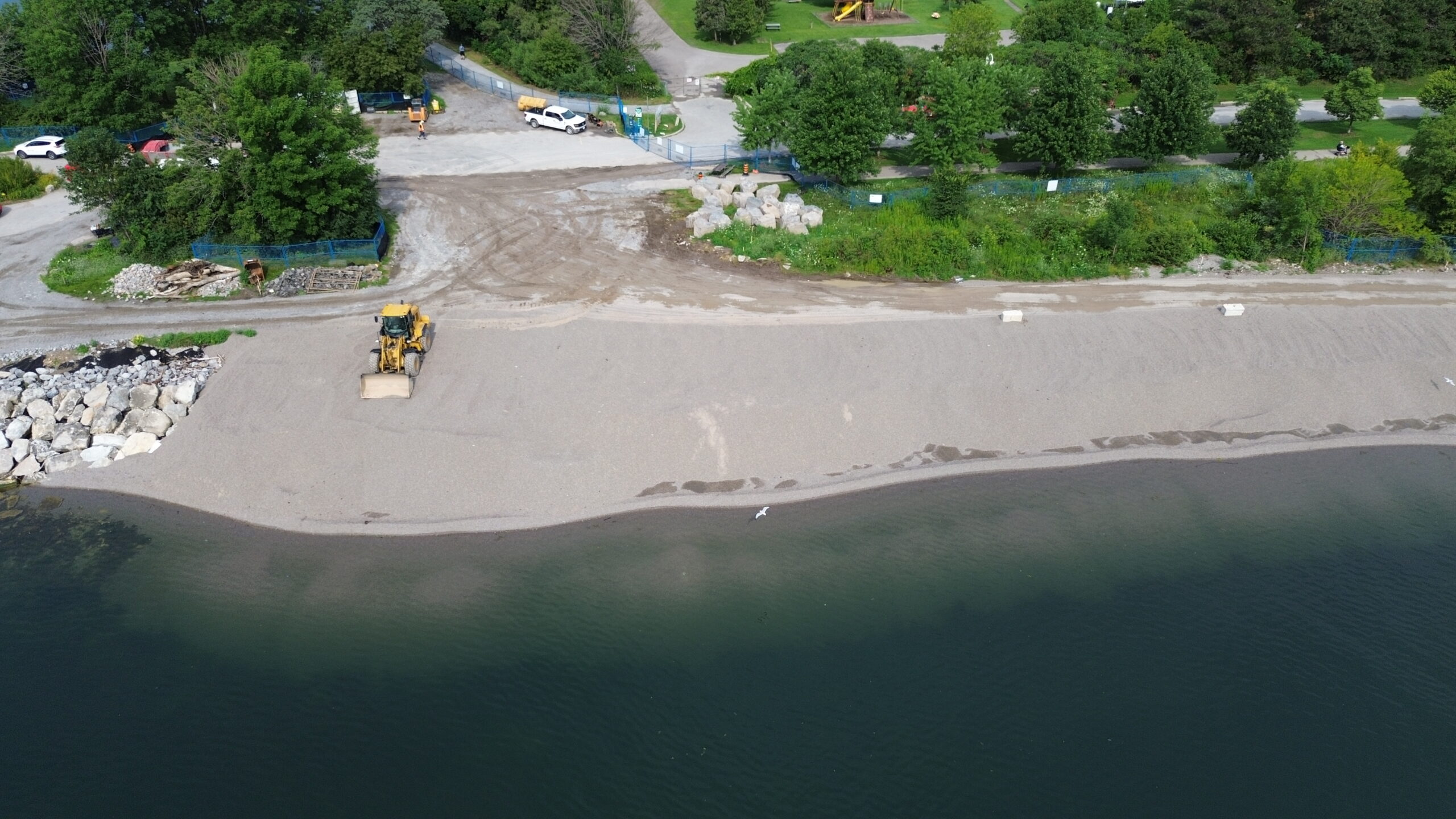
July 24, 2026
- Pebble material placement along the central beach has commenced
- Slope re-grading and placement of base layer material for armourstone revetment continues
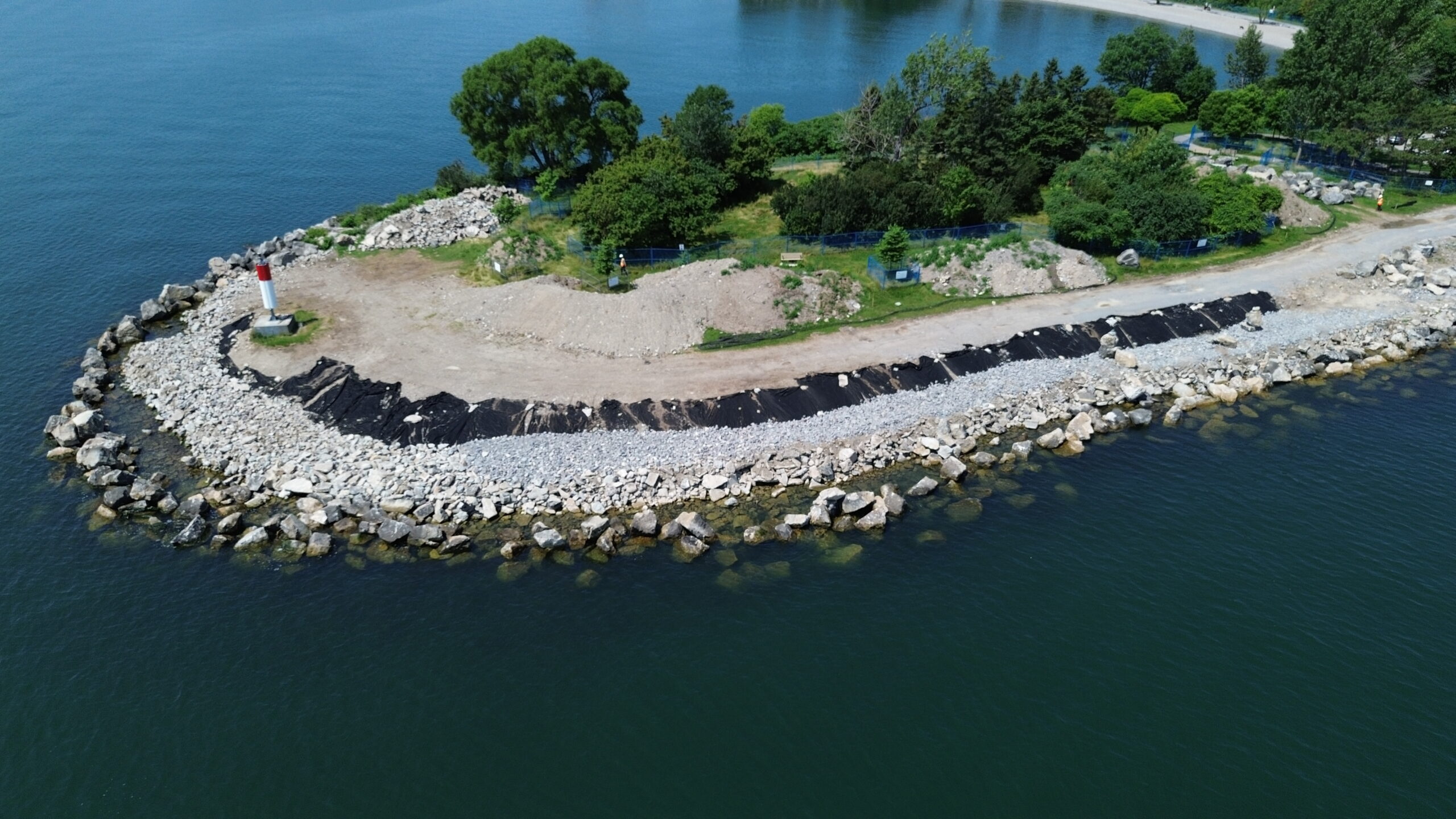
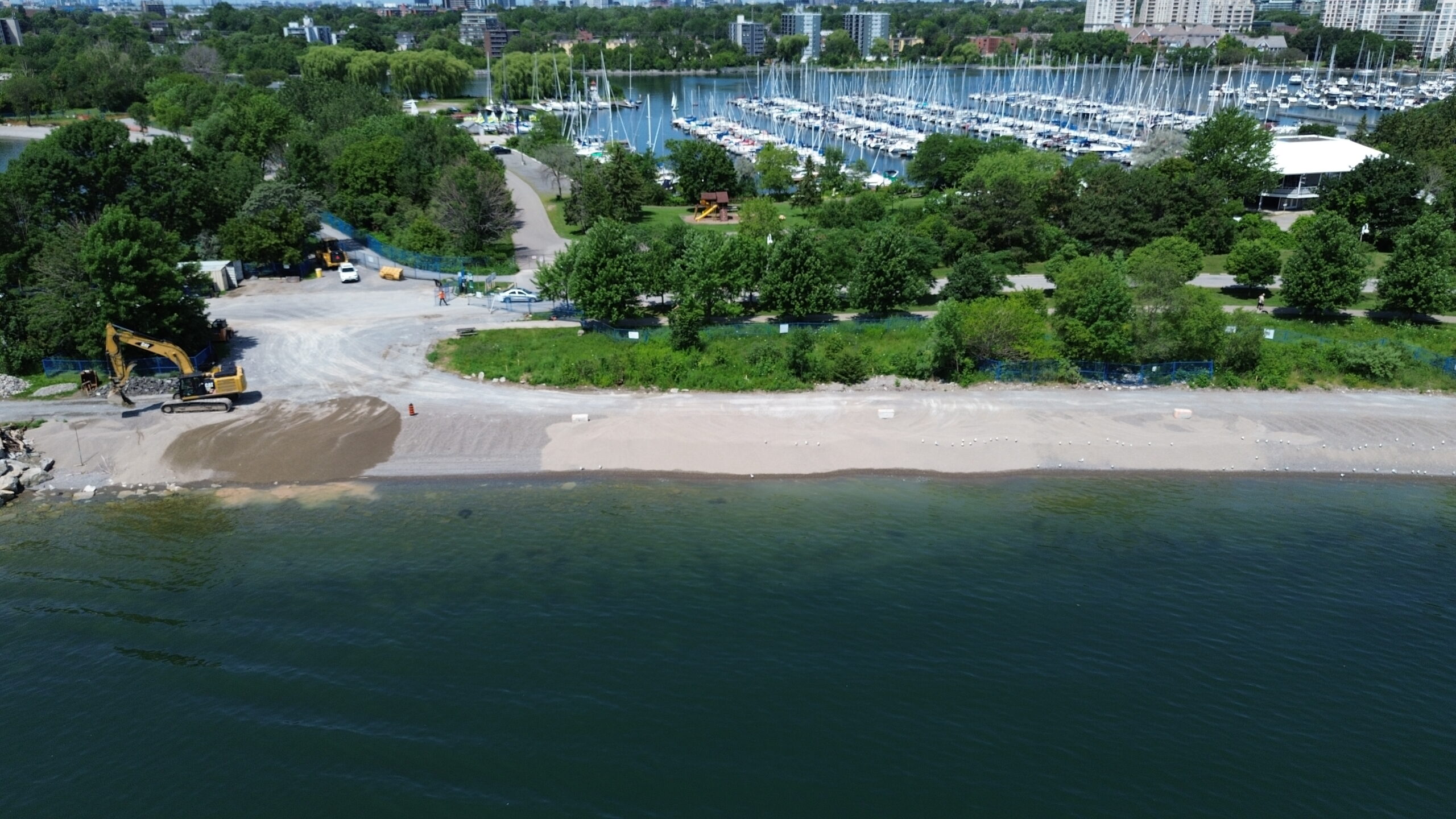
June 18, 2026
- Phase 2 of construction is underway (Etobicoke Point headland and central beach construction)
- Construction access road installed along central beach
- Slope re-grading and placement of base layer material for armourstone revetment rebuild in progress
- Minor spot repairs on west side of headland completed
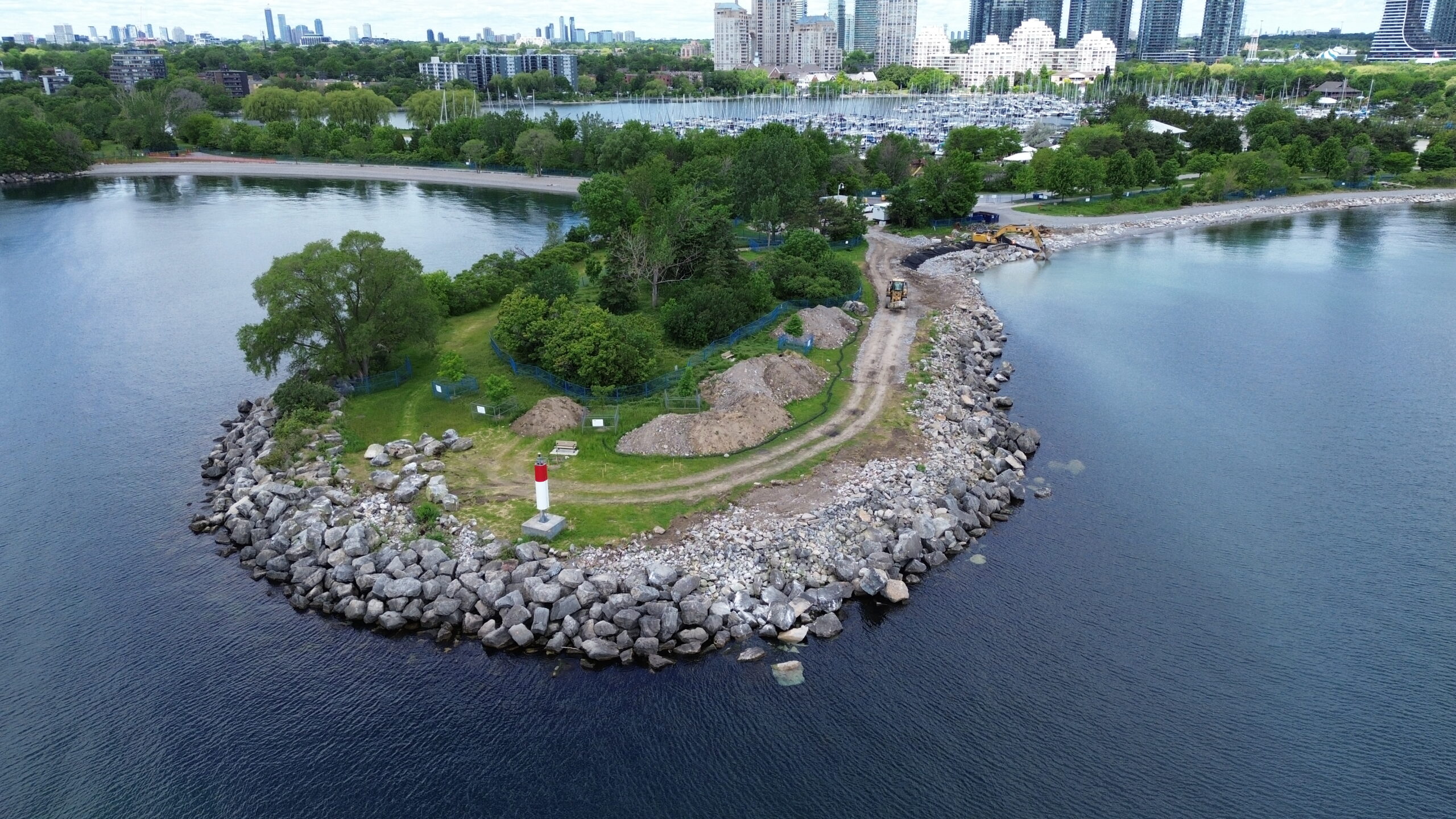
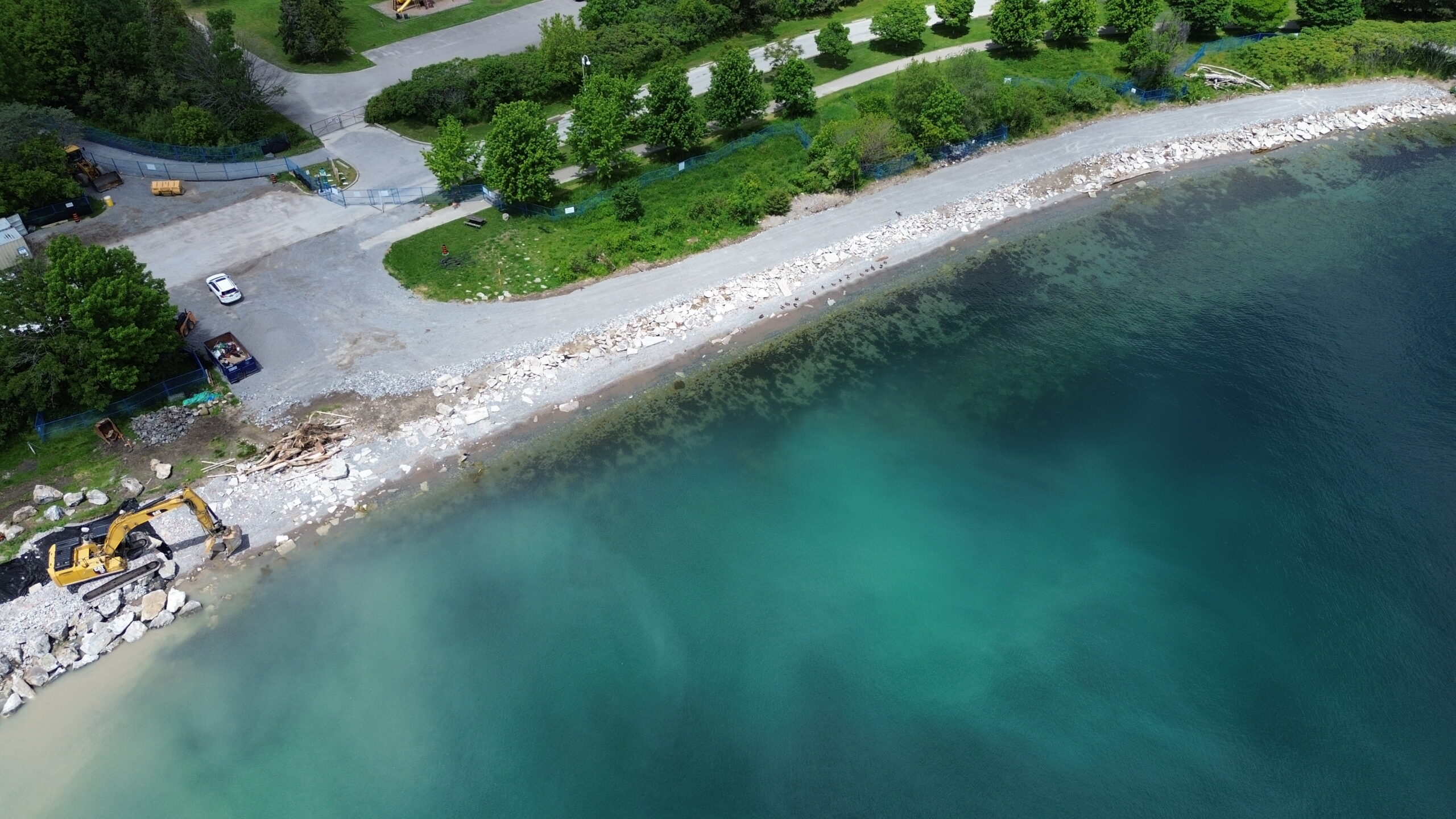
May 29, 2026
- Phase 1 of construction is completed (headland spot repairs and south beach construction)
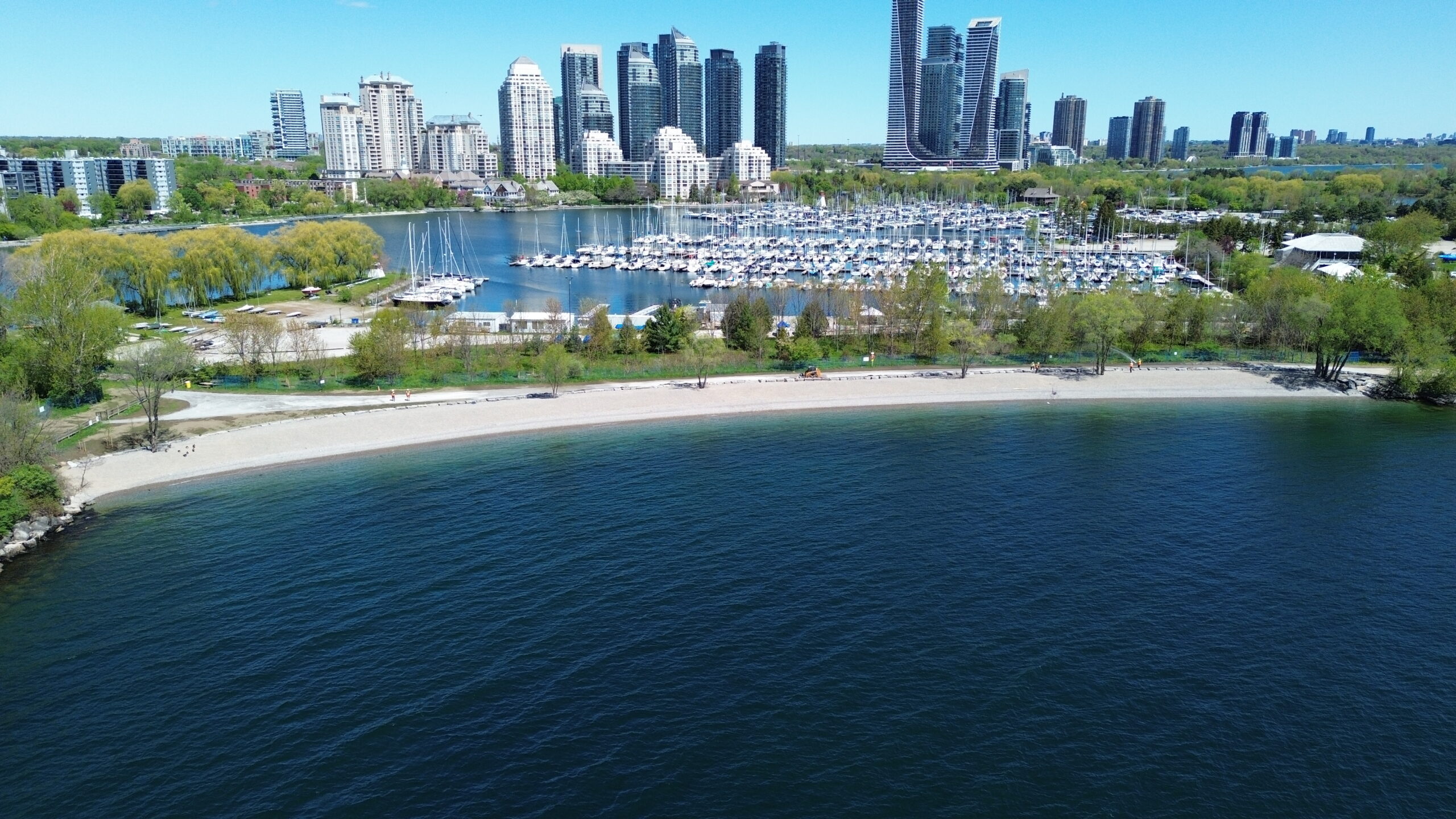
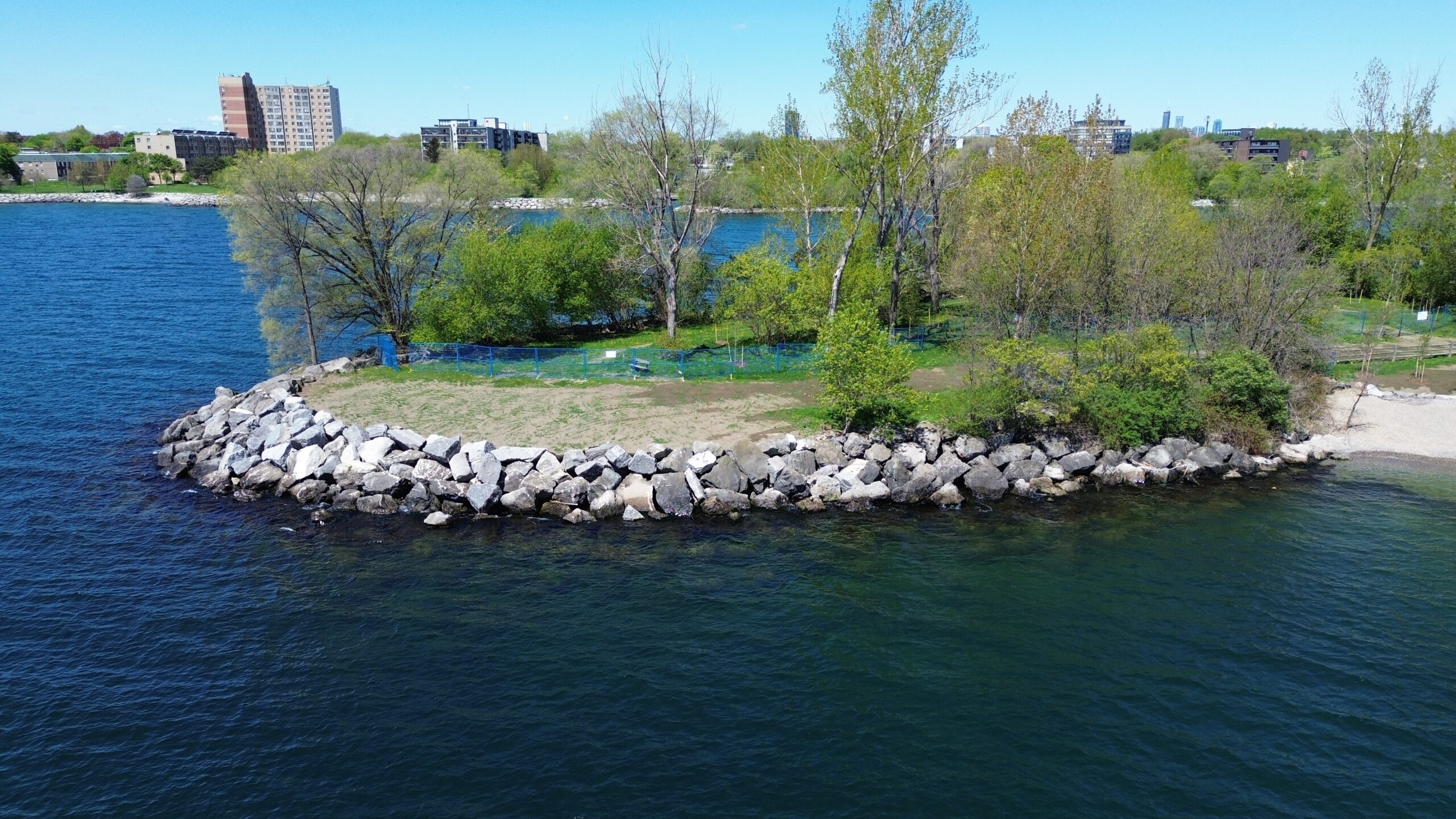
May 11, 2026
- Construction of the armourstone beach curb nearing completion.
- Restoration of the maintenance road along the south beach in progress.
- On-site compensation plantings for Phase 1 completed.
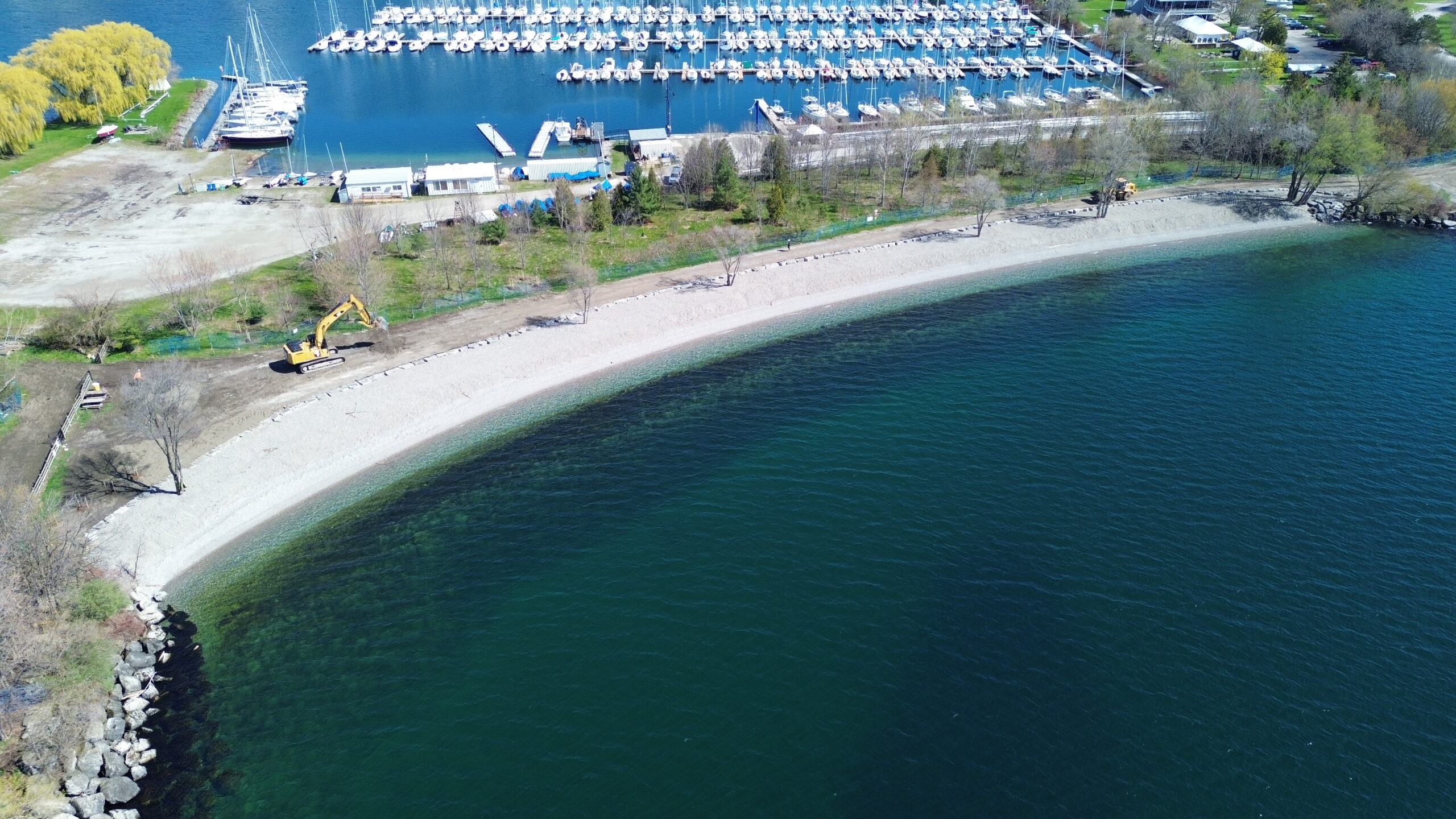
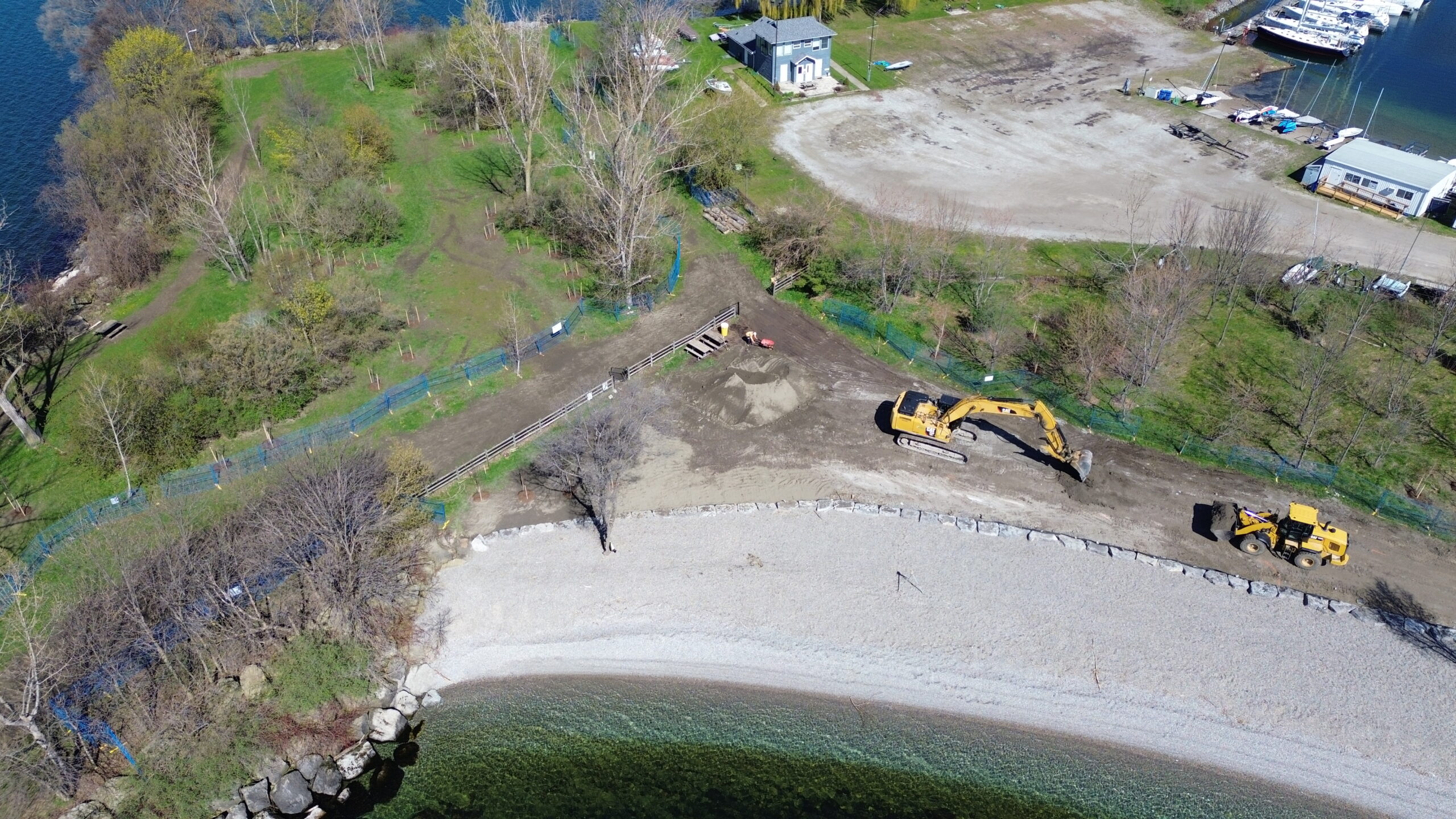
April 22, 2026
- Import of pebble material for the south beach is completed and placement continues.
- Construction of armourstone beach curb in progress (approx. 90 metres installed).
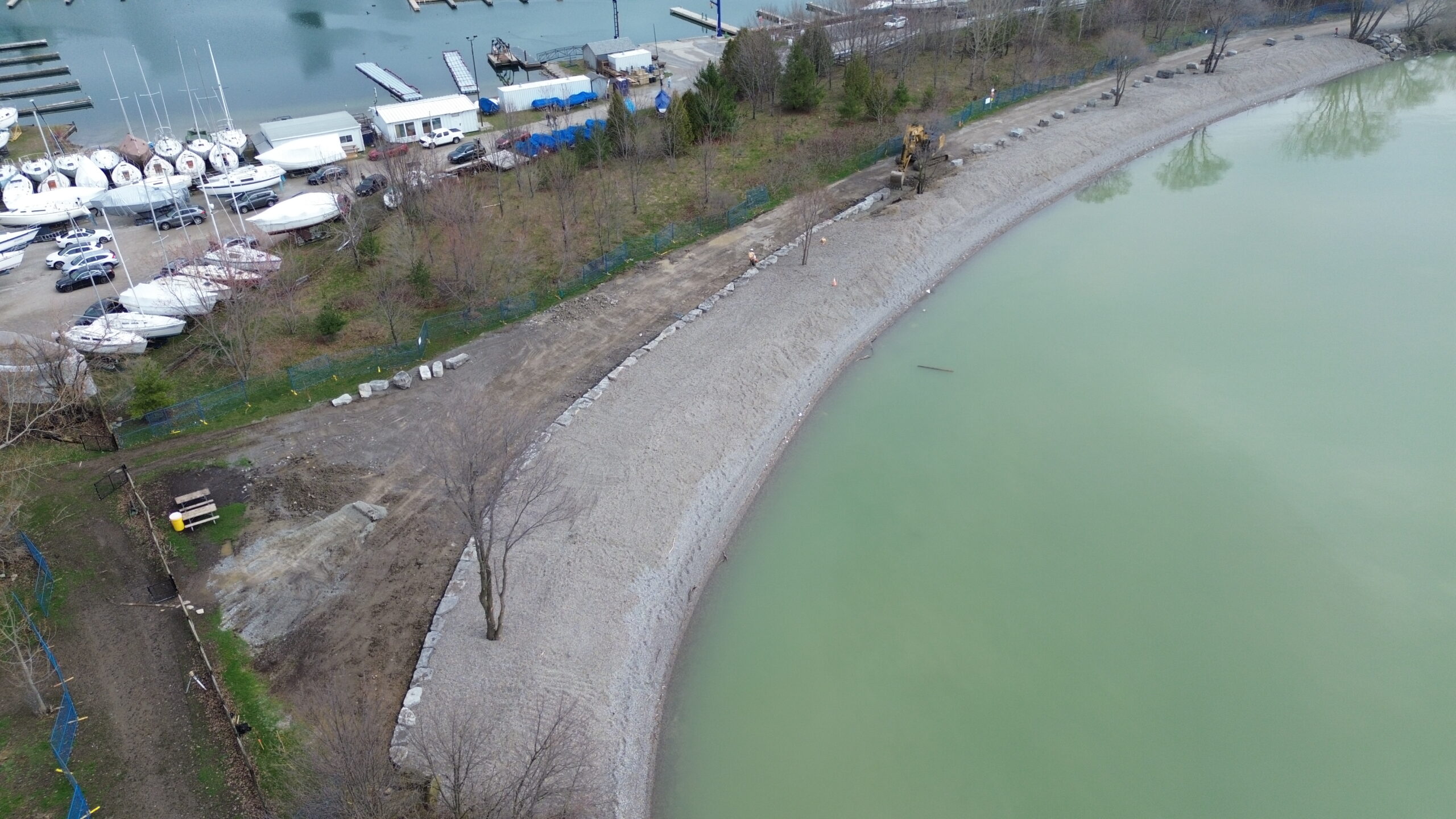
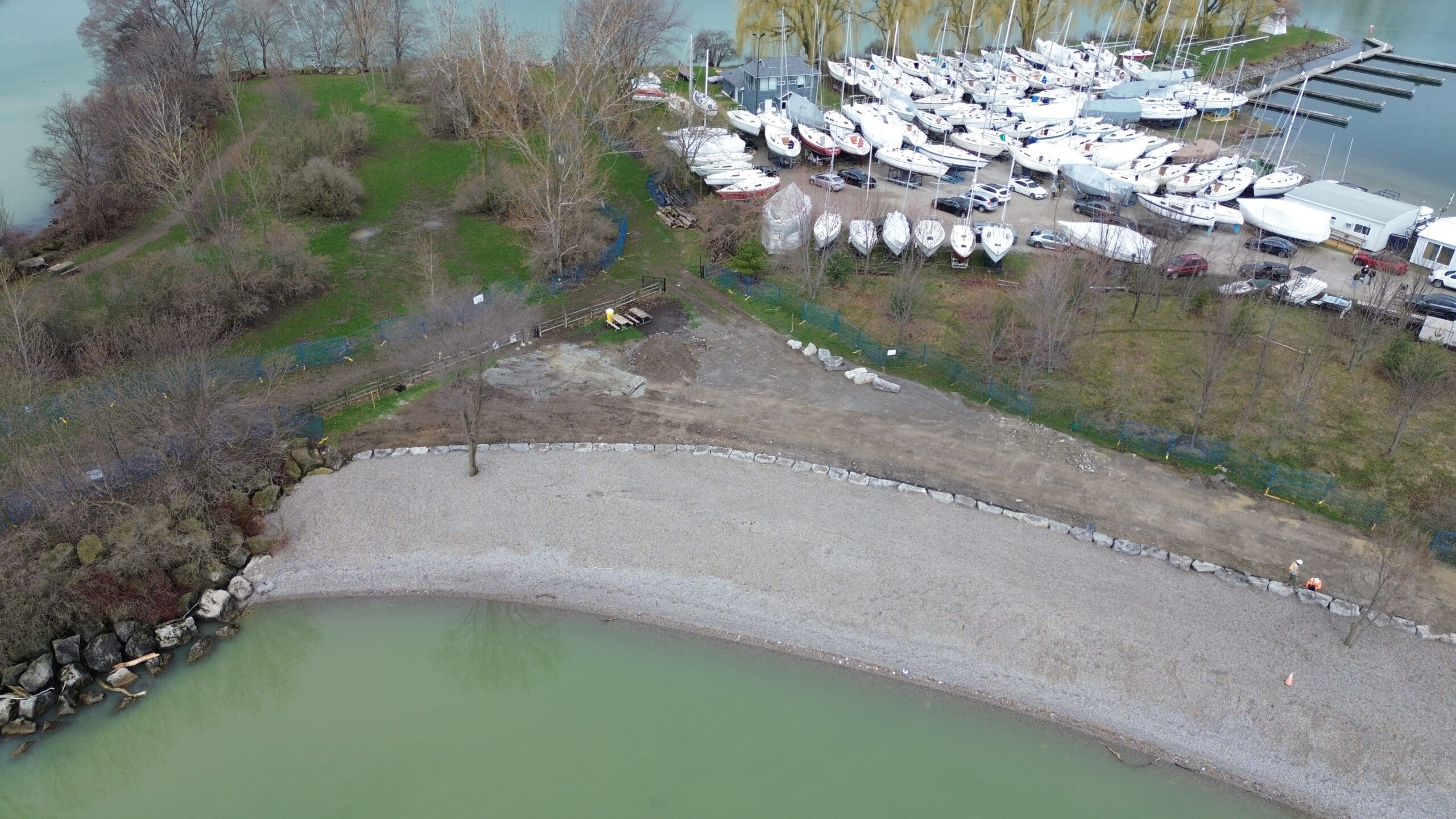
April 2, 2026
- Construction of the south beach continues with import and placement of pebble material.
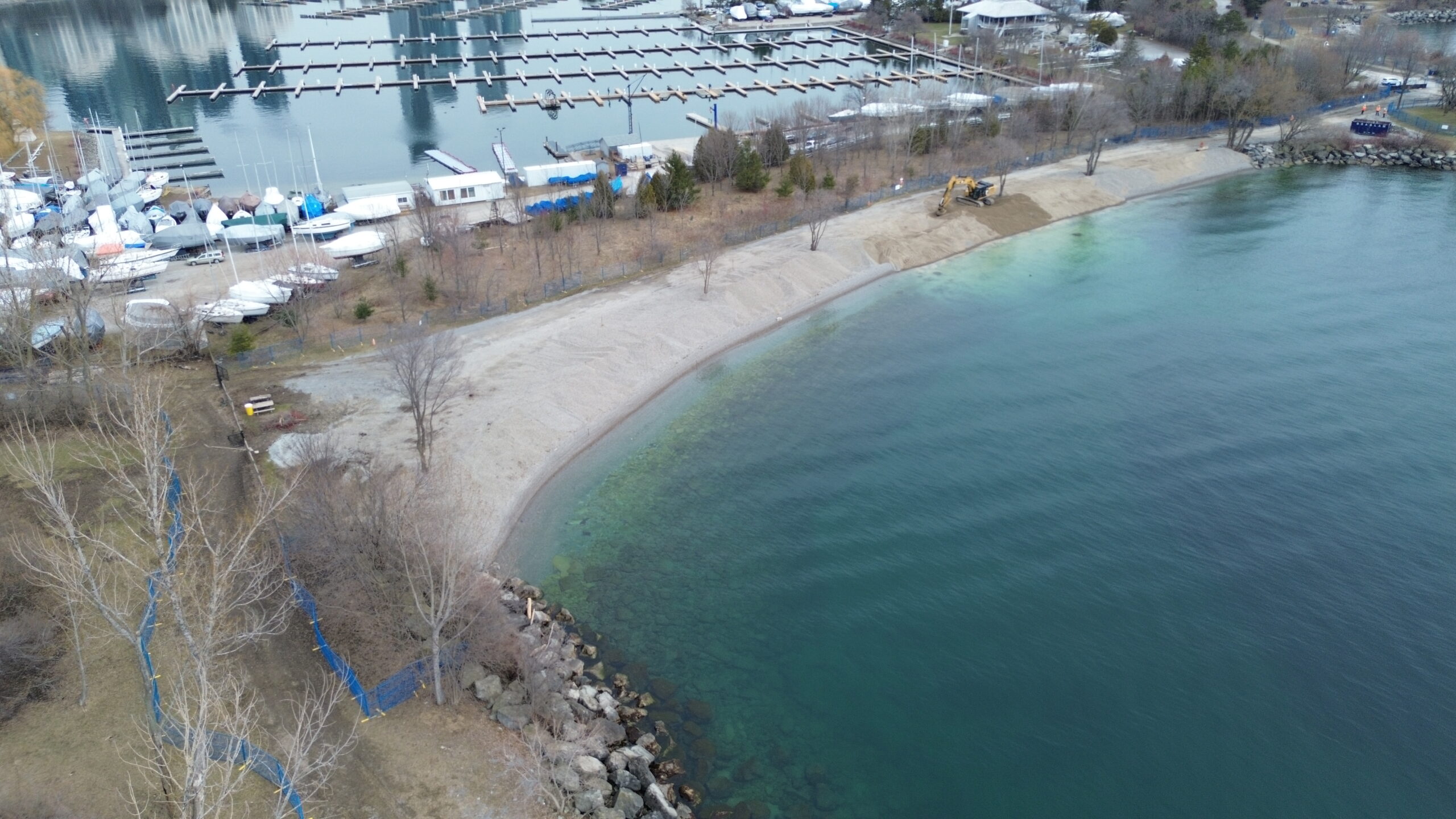
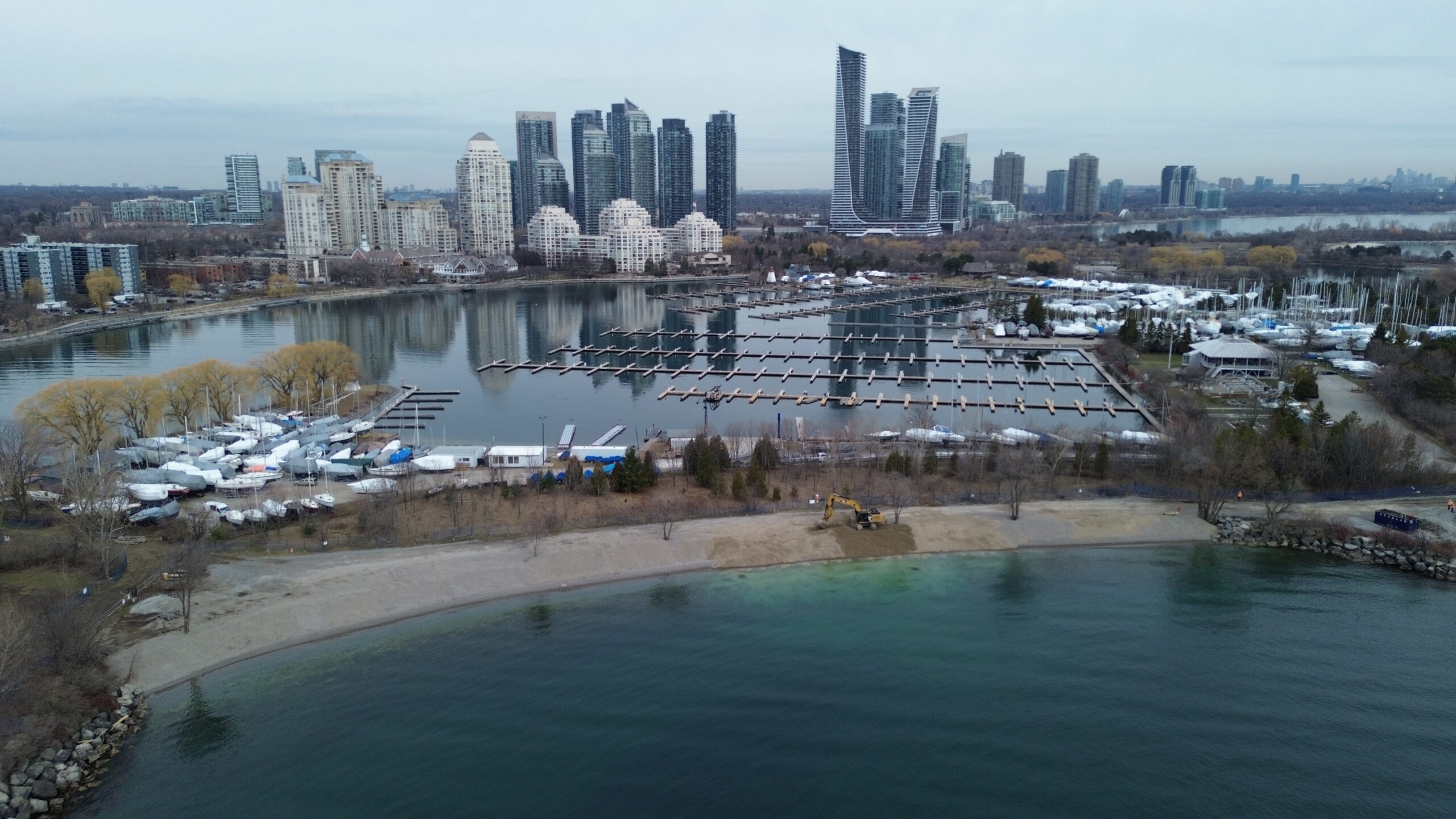
March 13, 2026
- Construction of the south beach continues with import and placement of pebble material.
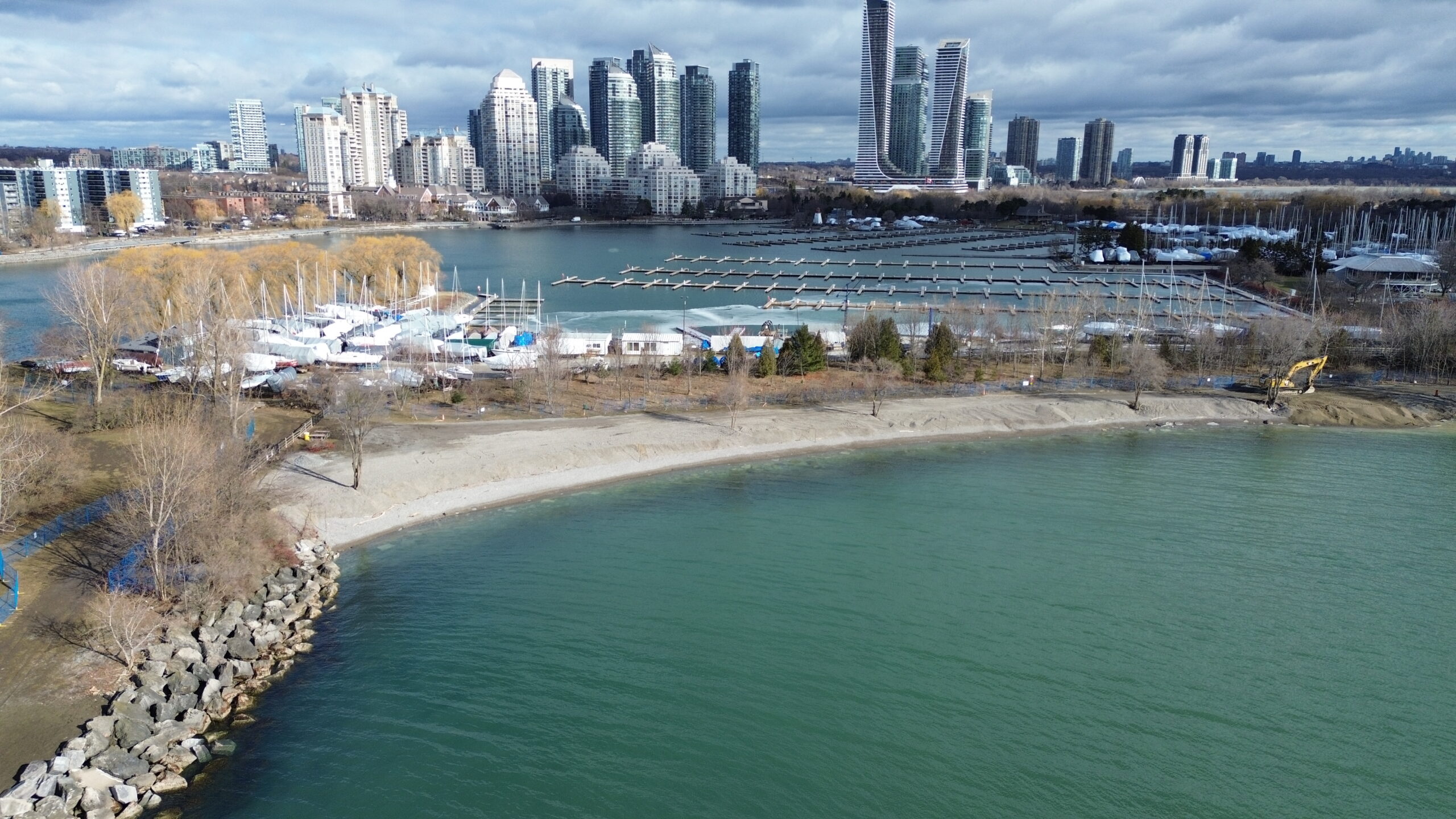
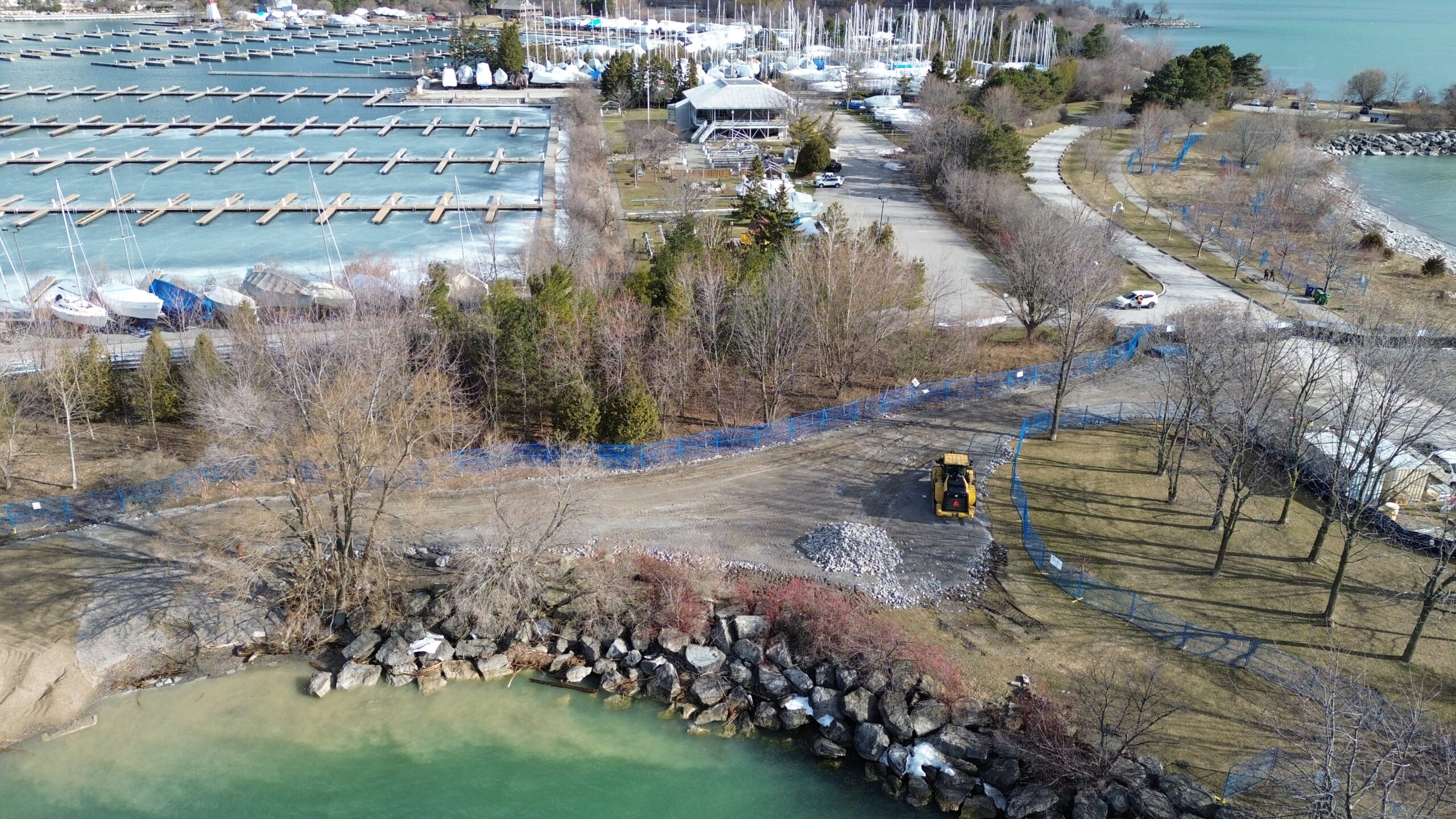
March 5, 2026
- Spot repairs on the southwest headland substantially completed.
- Construction of the south beach is underway.
- Phase 2 tree protection fencing installed along central beach in preparation for required tree removals.
- Note: These removals need to be undertaken before the migratory bird nesting period (April to August) to avoid schedule impacts and fencing must be in place as part of City of Toronto permit conditions.
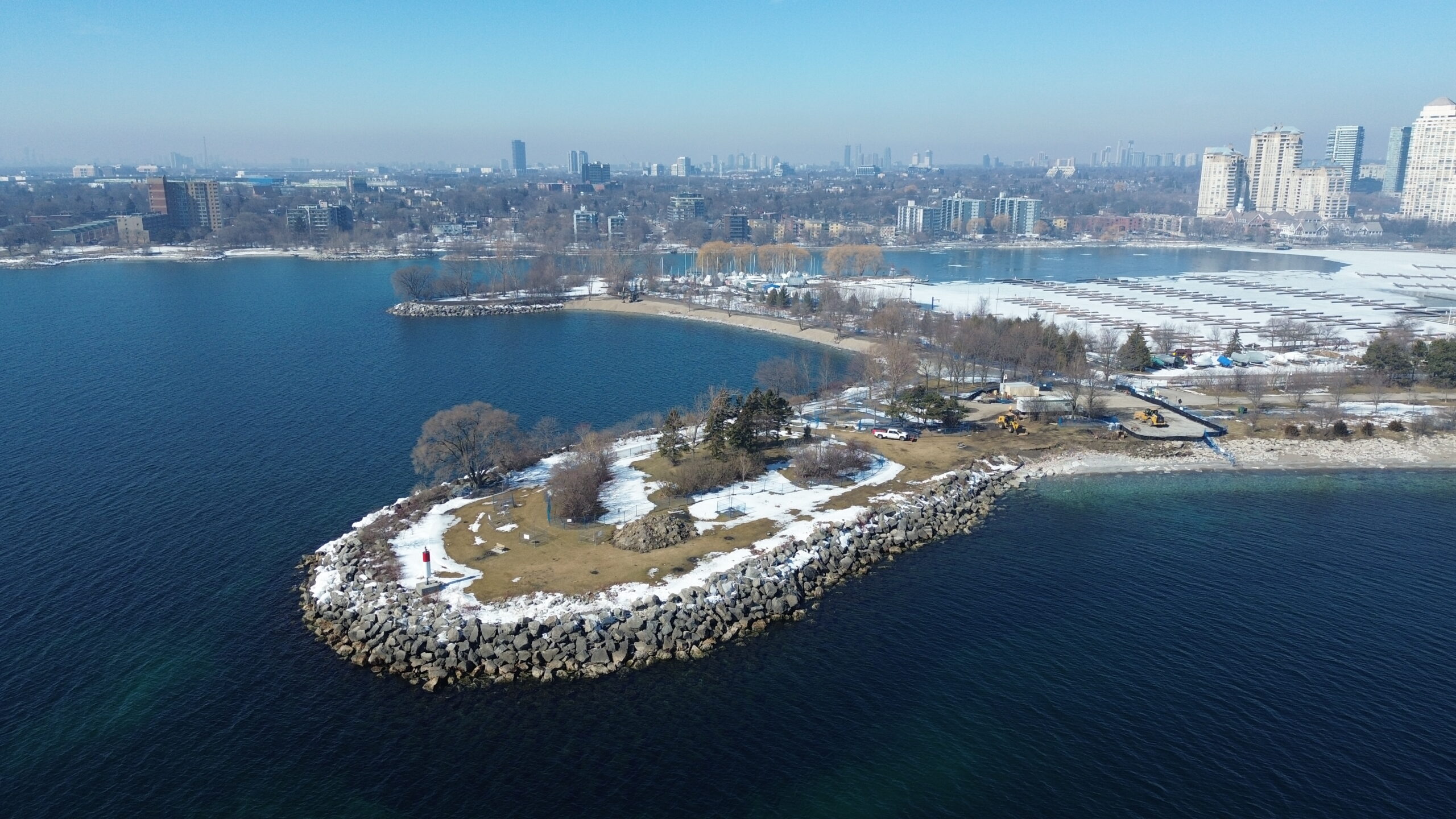
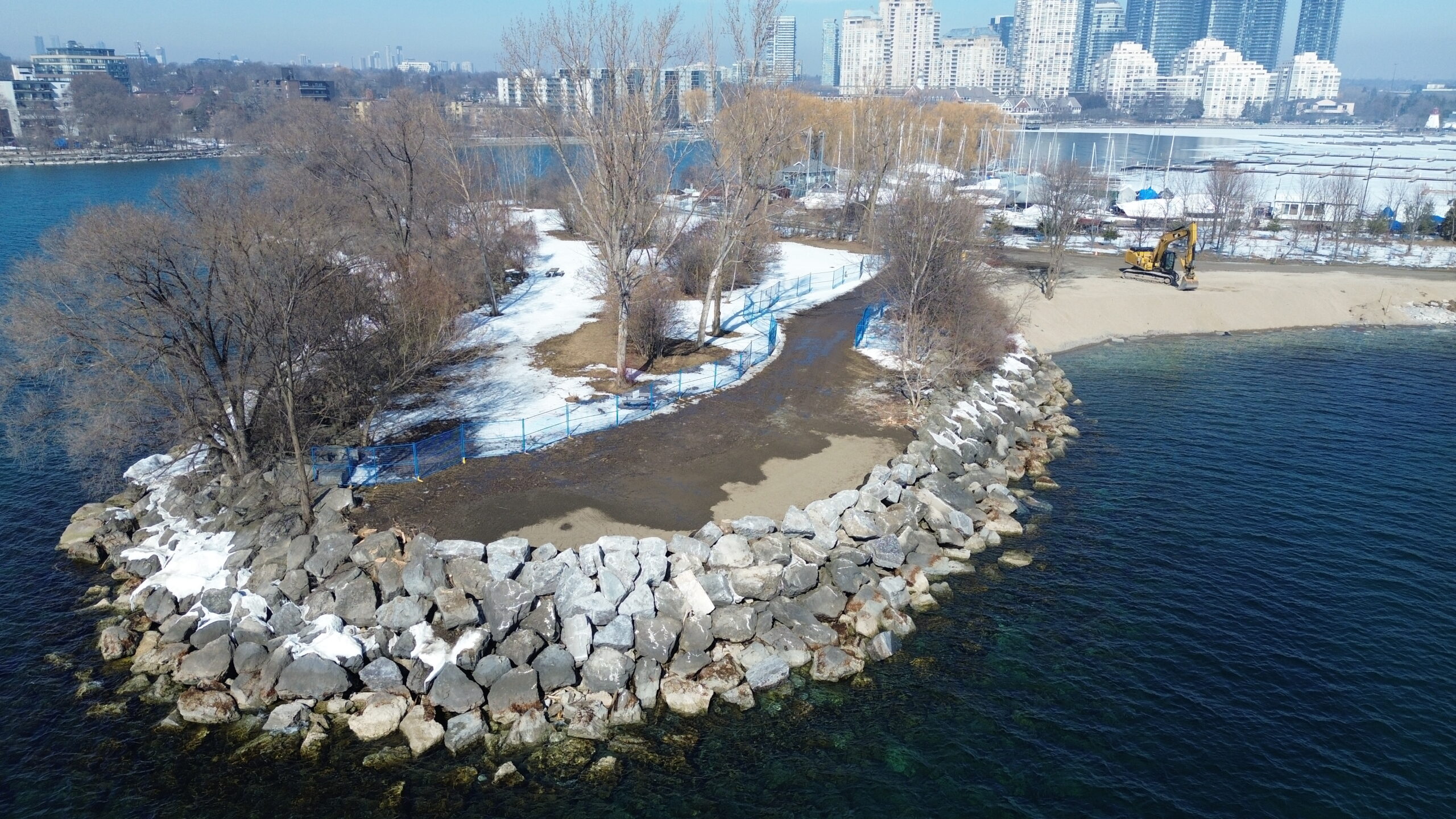
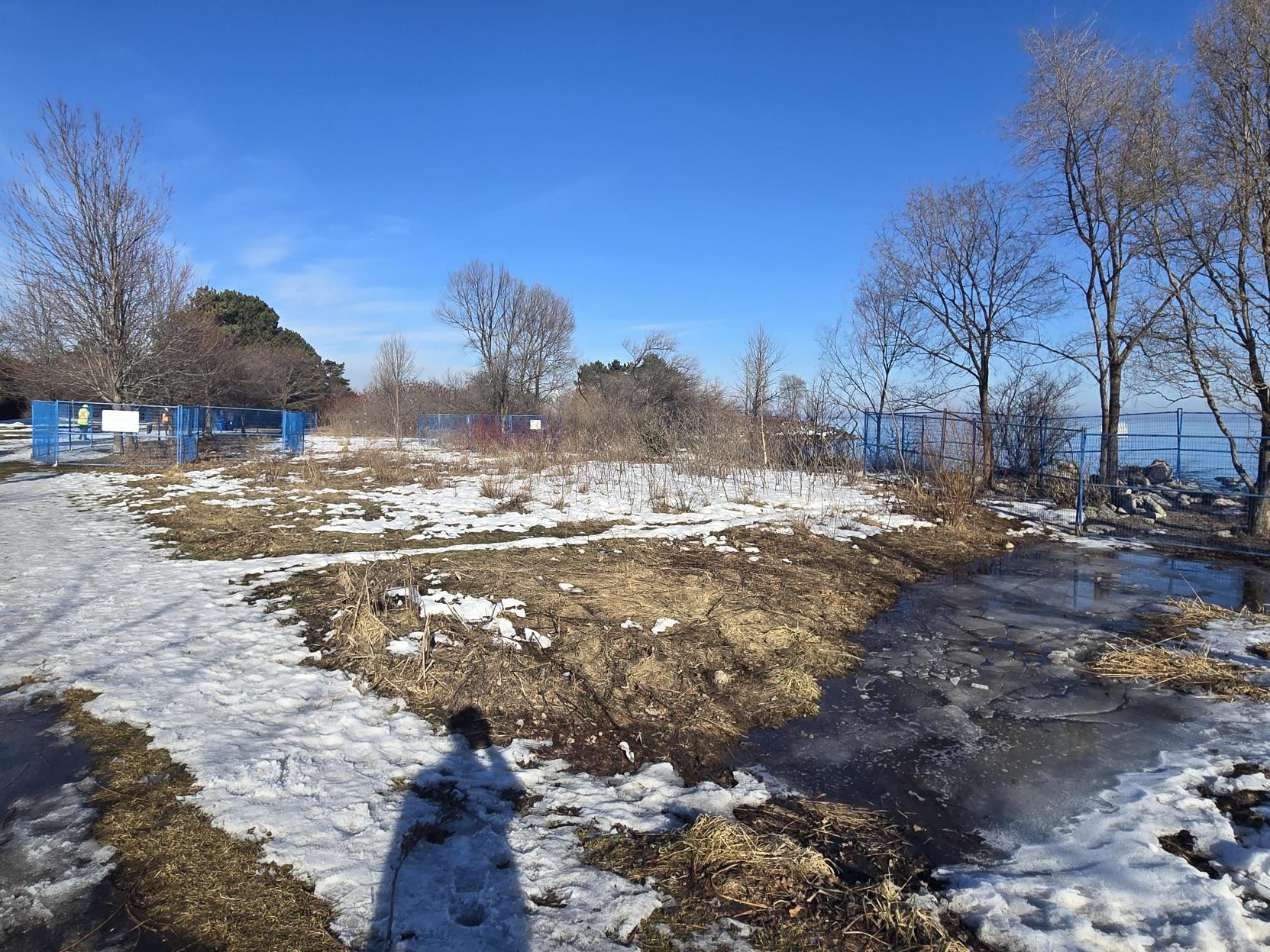
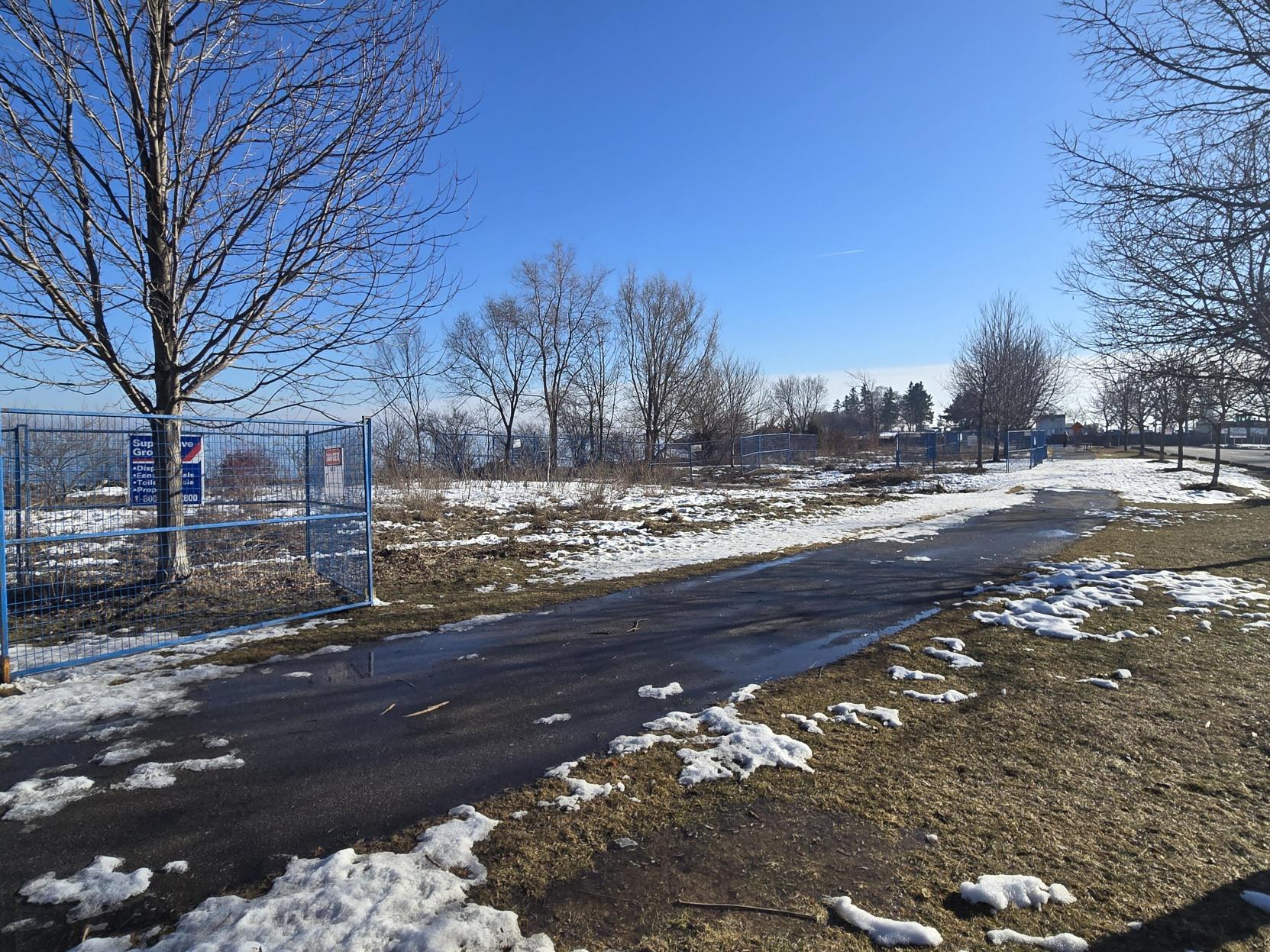
February 20, 2026
- Staging area established including site trailer.
- Snow clearing operations undertaken within work site.
- Phase 1 tree protection fencing installed and necessary tree removals undertaken.
- Construction of Phase 1 access road in progress.
Frequently Asked Questions
When will construction begin and how long will it take?
Implementation began in January 2026. At this time, it is expected that construction activities for Humber Bay Park West will take approximately two years to complete; however, the schedule is subject to change. Only one phase will be closed at a time. Refer to the Project Timing and Phasing panel.
How many trucks will use the access route?
Approximately eight to twelve trucks per day are expected between 7:00 a.m. and 4:00 p.m., Monday to Friday (excluding holidays).
How is this work being funded?
This project is funded by the City of Toronto and also received federal grant funding from Infrastructure Canada’s Disaster Mitigation Adaptation fund.
How is the shoreline maintenance strategy determined?
Coastal engineers assess the lake conditions to understand what type of wave action and water levels the park will experience to determine what types of materials and structures will be strong enough to protect the park from damage. This is considered along with park features and usage to design the shoreline maintenance solution.
Why are so many TRCA waterfront projects happening at once?
TRCA was a successful proponent of Infrastructure Canada’s Disaster Mitigation and Adaptation Fund, which supplements municipal funding up to 40% to support these shoreline protection projects.
While this funding helps to strengthen the Toronto shoreline at a reduced municipal cost, the projects receiving the funding need to be implemented within a particular timeframe.
Although this does mean more work occurring at the same time, it also means that more of the shoreline can be updated to protect against increased erosion due to climate change.
Are you planning to close this park while others are closed?
Humber Bay Park West implementation began in January 2026 and will therefore overlap with any remaining Humber Bay Park East work. Undertaking Humber Bay Park West in phases will help minimize closed portions of the park.
What is being done to reduce tree impacts?
- Limiting equipment access points to open areas (where possible) to reduce tree impacts, including avoiding or limiting work around mature trees.
- Compensating for any removed trees or shrubs with new plantings, on-site (where possible) and off-site, as required by the City of Toronto Urban Forestry permitting process.
How will wildlife be protected?
- Undertaking tree removals outside of the nesting window under the Migratory Birds Convention Act.
- Phasing construction to limit active areas of disturbance for aquatic wildlife.
Will beach access be impacted?
New beach material will be placed, as per design, between a 3:1 and 4:1 slope. This is similar to constructed grades of the beaches during development of the park in the 1970s.
The design allows for movement of the new beach material. However, it is expected that access to the shoreline will not be impeded.
Will exposed rebar be removed?
This park was created with excavated materials and rubble surplus from construction projects in the City of Toronto in the 1970s. This material included concrete with reinforced with rebar. Over time waves have eroded the concrete, leaving exposed rebar.
Where possible, rebar will be removed in the work areas during construction, however over time as the lake shifts the new beach material within the beach area it is likely that rebar will gradually become re-exposed.
What are the impacts to informal trails and park benches?
Minor informal trail re-alignment is proposed along the north beach to provide buffer from eroded slope.
Any benches within the work area that need to be temporarily removed will be re-instated in areas to maintain sightlines and ensure public safety in coordination with City of Toronto Parks and Recreation staff.
Contact Us
For more information regarding this project, please contact:
Robyn Cox, Senior Project Manager
Erosion Risk Management
Restoration & Infrastructure Division
HBPW.Shoreline.Maintenance@trca.ca