PLAYING TOGETHER:
Connection from Land and Sport
For generations, Indigenous peoples have engaged in land-based learning, where children explore, observe, and discover the world around them.
Through play, they develop a deep connection with the land and waterways, gaining knowledge that is passed through generations. This relationship fosters respect for nature and teaches lessons about sustainability, community, and resilience.
Play is not just a pastime: it is a way of learning, storytelling, and strengthening relationships with both the natural world and one another.
When European settlers arrived in the region, they also found ways to connect through play, particularly through organized sports.
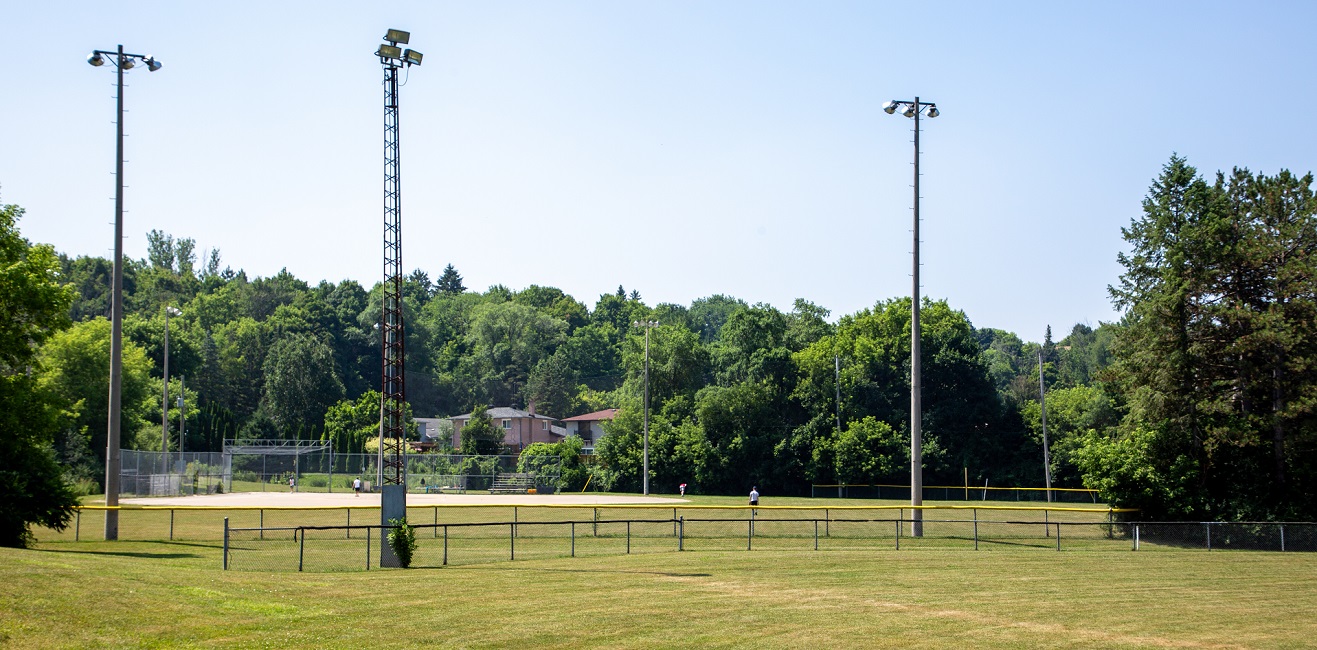
As towns grew, sports fields, baseball diamonds, and skating rinks became gathering places where people could compete, socialize, and build a sense of community.
Unlike land-based learning, which is rooted in environmental awareness, settler sports emphasized structured competition, teamwork, and recreation as a break from work.
The Baseball Boom
By the late 1800s, baseball had become a cornerstone of life in Bolton, bringing the community together in competition and celebration.
Led by star pitcher Harry Sheardown, the Bolton Baseball Team dominated the Southern Ontario baseball circuit, drawing crowds eager to cheer on their local champions.
Women also found their place in the sport, despite barriers to competition. The 1925 Bolton Ladies’ Softball Team proved their skill on the field, winning the Toronto Ladies’ Softball League and advancing to the Canadian Championship.
For Indigenous communities, play has long been a way to learn from the land, building knowledge and relationships that extend across generations. Similarly, for settler communities, baseball fields became gathering places, where shared experiences and friendly rivalries strengthened local ties.
Whether through a casual backyard game or the excitement of a championship match, sports have remained a powerful force for connection, tradition, and belonging.
Throughout the mid-1900s, Bolton’s love for baseball only grew. In the 1970s, the Bolton Enterprise dedicated an entire sports section, “Diamond Doings”, to the town’s baseball and softball successes. Bolton’s women’s and men’s teams claimed victories in numerous leagues and tournaments, deepening community pride and reinforcing the town’s sporting legacy.
Through baseball, generations of Bolton residents have forged lasting friendships, carried on traditions, and shaped a shared sense of identity, one inning at a time.
Natural Playgrounds
Today, children at Ted Houston Memorial Park experience a different kind of play, one that reconnects them with nature. The park’s playground, part of a Town of Caledon and TRCA SNAP initiative, is built from natural materials like wood, rope, and stone, offering a sensory-rich environment that encourages creativity and exploration.
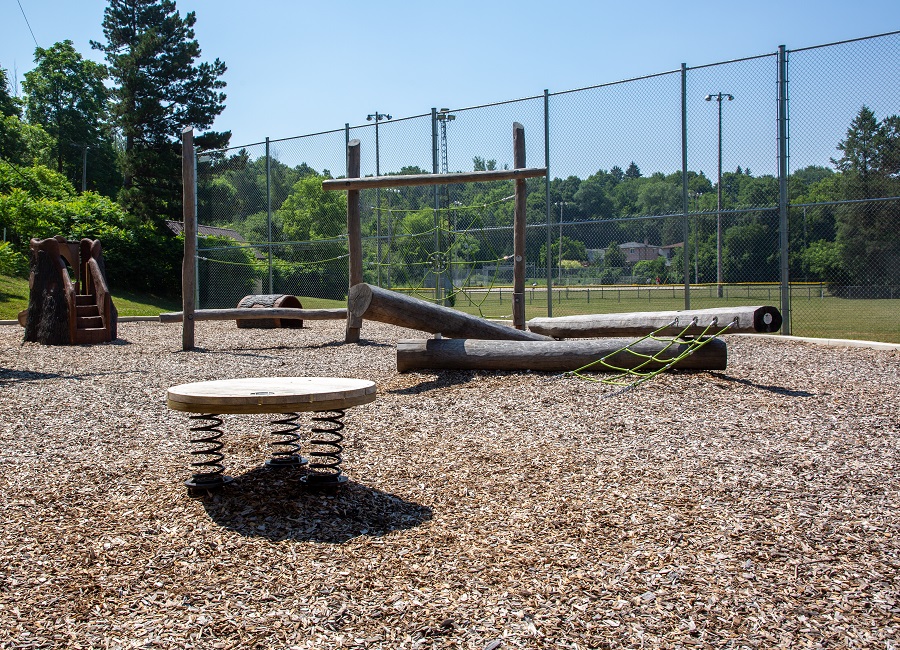
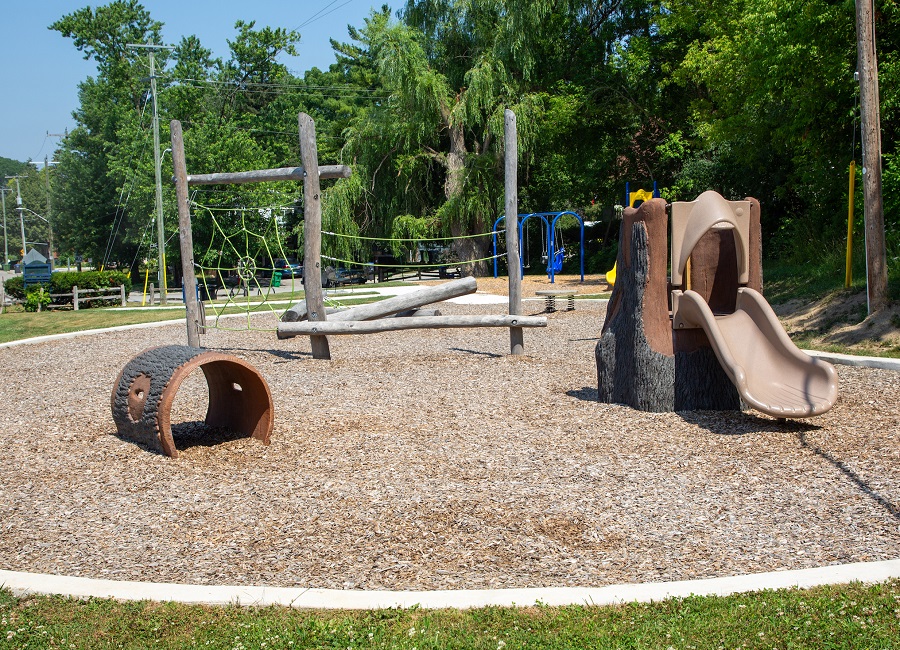
Natural playground at Ted Houston Memorial Park.
Just as Indigenous land-based learning fosters a relationship with nature, playing in natural spaces nurtures curiosity and a sense of stewardship.
When children form early connections with the environment, they develop lifelong habits of care and sustainability. Whether through sport or imaginative outdoor play, coming together to learn, compete, and explore strengthens both community and our bond with the land.
Archival Spotlight
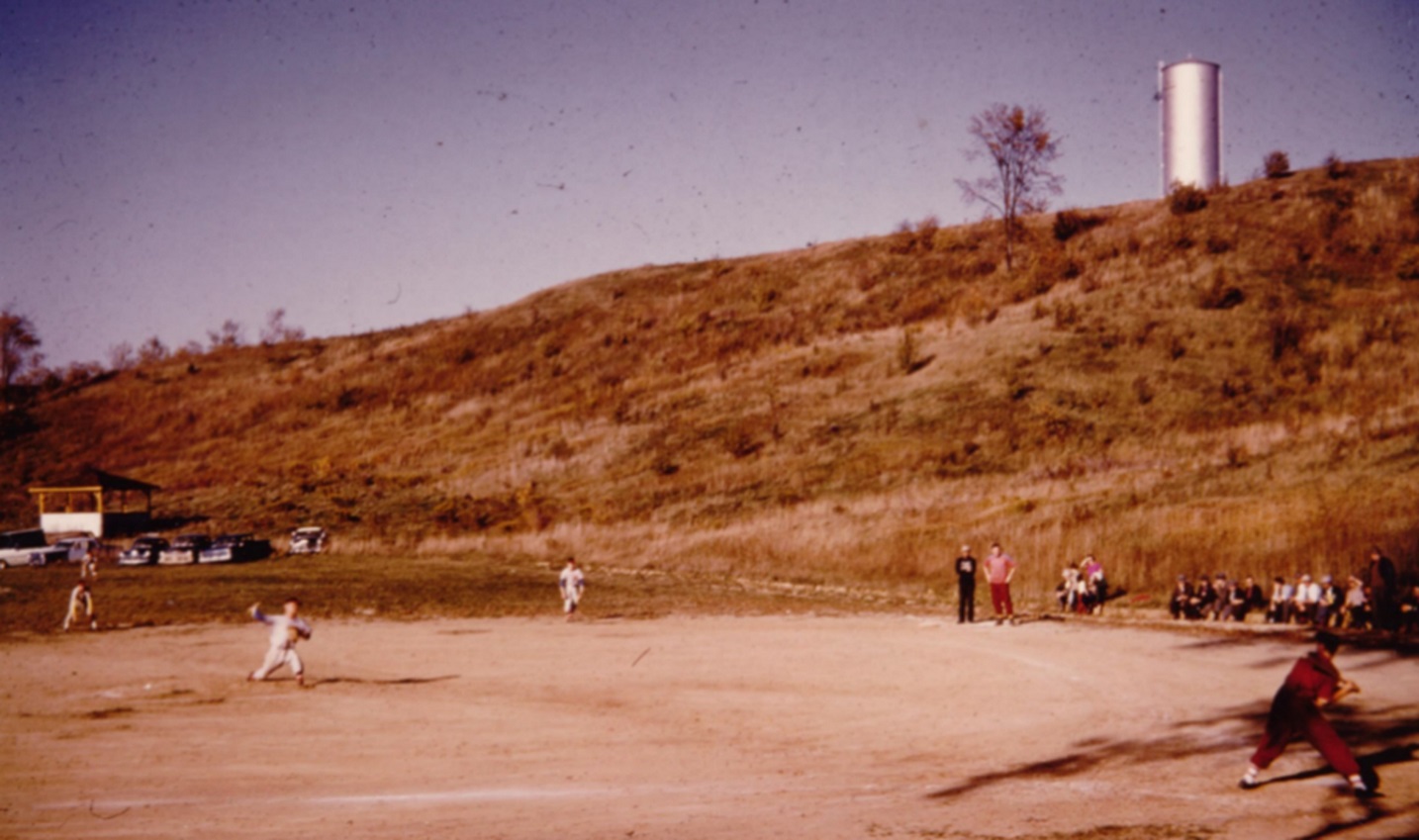
This photograph captures a baseball game played right here, in Homestead Park, during the 1950s. Notice the capri-length baggy pants and high socks, signature styles of baseball jerseys from that era!
At the time, much of West Bolton was still undeveloped, with a lone silo on the hill standing as a subtle marker of the growth that would soon take shape in the following decades.