2024 Peel Climate Change Performance Measurement System: Final Report
Executive Summary
Since 2007, the Region of Peel has provided special levy funding to address unfunded and underfunded activities that combat the impacts of climate change. In 2016, Peel Council requested that performance indicators be established to further assess the effectiveness in achieving desired climate change outcomes.
This project assists both Credit Valley Conservation (CVC) and Toronto and Region Conservation Authority (TRCA) in monitoring and reporting on the impacts of programs funded through Peel Climate Change special levy.
By undertaking this initiative as a collaborative effort between Peel, CVC and TRCA, we can develop a consistent approach in measuring and illustrating the links and impacts of Conservation Authority (CA) work in the Region of Peel.
The goal of the Performance Measurement System is to provide useful, timely and regular information to staff and decision-makers on the effectiveness of Conservation Authority funded work towards climate change goals.
The system, prepared in consultation with KPMG, is broken down into nine program areas, each with a well-defined Key Performance Indicator. These program areas are examined on an annual basis through a straightforward but systematic approach.
The information collected is used to provide a point-in-time score, information that informs trends, along with details to help drive continuous improvement.
This annual report summarizes the Performance Measurement System results for 2024, specifically:
- How well each of the program areas are performing.
- Where improvements can be made within the various program areas.
- How regional investments are achieving shared climate change outcomes.
Continuous improvement considerations remain a priority for the ongoing development and refinement of this Measurement System with the overall goal of ensuring integration and practical alignment with the Region’s needs remaining an area of focused dedication.
VIEW & DOWNLOAD THE FULL REPORT
VIEW PREVIOUS ANNUAL REPORTS
• 2023
• 2022
• 2021
ABOUT THE MEASUREMENT SYSTEM
In developing the Measurement System, a consistent methodology established shared Key Performance Indicators (KPIs) that measure the collective performance of TRCA and CVC climate change initiatives. It aligns 44 cost centres between TRCA and CVC into eight program areas (each with its own performance indicator), and calculates a greenhouse gas (GHG) emissions reduction/sequestration value.
These program areas and the corresponding KPIs are presented through three performance groupings: Adaptation, Knowledge and Awareness, and Mitigation.
The performance indicators use a qualitative approach to provide information regarding the likelihood of a program area achieving defined goals.
Consistent with past reports, the 2024 report provides an overall score for each program area, a summary of how well each of the program areas is performing and information that can be used to identify program improvements.
READ MORE ABOUT THE MEASUREMENT SYSTEM
ADDING VALUE THROUGH CO-BENEFITS
Co-benefits can be defined as the positive results that occur in addition to the primary benefits associated with the main program area objective. They provide added value that is not currently reflected in the scoring framework.
Co-benefits are often included in climate change discussions, as they demonstrate the ways in which climate action can help advance other broader societal, environmental, or economic goals in important, though less direct, ways.
While research emphasizes the importance of recognizing co-benefits, the methodology for identifying and reporting them is still emerging.
In 2022, a pilot project introduced an approach to identify and integrate co-benefits into the performance report. In 2023, this methodology was refined to ensure consistency across all program areas, with program staff identifying significant co-benefits based on user feedback and expertise.
To be included in the measurement system, a co-benefit must meet two criteria: it must be a distinct value-add to the program area objective, and must be significant. Co-benefits are significant when they are attributable and material.
The identified co-benefits that met these criteria were then aligned to the application of co-benefits in the Region of Peel’s Climate Change Master Plan.
PERFORMANCE REPORT HIGHLIGHTS
- All of the eight program areas scored as either Effective or Very Effective in achieving the program area objective. Seven of the eight programs scored as Very Effective.
- Scores ranged from 3.8 to 4.8 out of 5.0.
- There was little variation between the 2023 and 2024 scores for all program areas, resulting in no changes to the rating category on the Measurement System scale. Seven of the eight program area scores were within 7% of their 2023 scores and the remaining score was within 12%.
- All scores were within the 20% acceptable variance from the previous year. This variance threshold is based on best practices in performance measurement systems.
View More Performance Report Highlights
Performance Report Overview
PERFORMANCE REPORTS BY PROGRAM AREA
ADAPTATION PERFORMANCE REPORT
CLIMATE SCIENCE
Budget: $1,017,367
SCORE
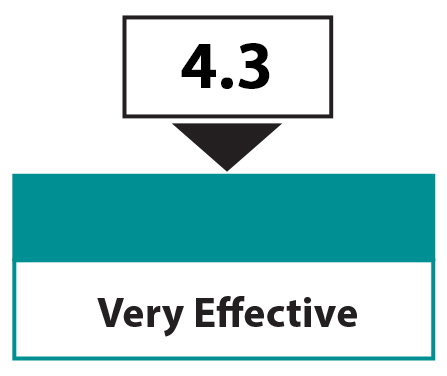
Change from 2023: -7%
Program Area Objective
Reduced negative impacts of climate change (due to the implementation of useful and effective plans for protection and recovery measures).
Actions
- Applied research and monitoring of climate change impacts, risk factors and adaptation measures with a focus on ecosystem and watershed health (water quality, flooding, erosion, extreme heat and ecosystem biodiversity).
- Knowledge dissemination, advice and training to support climate change-related strategies and plans for external (municipalities) and internal (CAs) users (for example: risk assessments, screening tools, carbon offset plans).
Results
- Reviewers rated program outputs from highly useful to very highly useful in informing municipal and conservation authority decision making and resource management.
- Program outputs provided useful tools for recognizing climate change impacts, identifying solutions, and prioritizing implementation of climate change adaptation and resiliency actions.
- Reviewers acknowledged that data generated by the climate science program outputs would have direct and immediate impacts on existing programs including road salt management, water resource and watershed management, energy management, forest management and flood reduction.
- Recommendations for improvement include: increased communication between CAs and Peel Region for flood risk assessment projects, process improvements for inventory and condition assessments of green infrastructure on Peel Region roads, and increased monitoring of Microbial Source Tracking (MST) along with its integration in climate change adaptation monitoring.
Co-benefits
| Environmental Benefit |
 |
Applied research and monitoring of climate change impacts supports the development of positive actions (i.e., increased tree planting, reduced use of road salt), which benefit the natural environment. Biodiversity plays a critical role in supporting human population health by ensuring the provision of essential ecosystem services, including clean air and water, as well as temperature regulation. |
| Health Benefit |
 |
New data and knowledge of climate change impacts and nature-based climate solutions support the development of better-informed decisions on how people and communities can adapt to climate change and improve their health outcomes (i.e., reduction of human exposure to bacteria in urban creeks, potential to improve detection of toxic algae near drinking water sources.) |
| Social and Quality of Life Benefits |
 |
The dissemination of knowledge and information about climate change issues, impacts and adaptation measures increases residents’ understanding of environmental issues and their impact on their local natural environment, which forms the basis for community action and behaviour change. |
View the Detailed Program Area Report
FLOOD MANAGEMENT
Budget: $2,095,838
SCORE
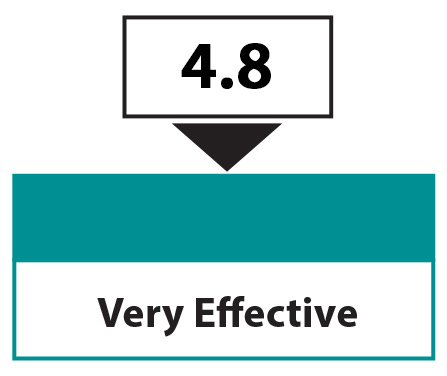
Change from 2023: +4%
Program Area Objective
Minimize the risk of flooding (due to the construction and maintenance of protective infrastructure and the use of program area information
for planning and implementing flood minimization measures).
Actions
- Construction and/or maintenance of flood protection infrastructure (in some years).
- Development and dissemination of information regarding flood probabilities, potential flood impacts, and flood minimization options.
Results
- Reviewers found the program to be very highly useful overall in providing valuable real-time data for flood emergency response and mapping and monitoring data to inform planning and flood/climate adaptation to reduce flood risk.
- Program outputs produced useful information that is timely and meets the needs of users for short-term planning and response as well as decisions with longer time horizons.
- Areas for improvement cited include: specific data and/or resource requests including mapping and infrastructure; improvements to data communication including access in real time and simplifications of explanations for certain user groups (local emergency managers); improved integration within teams (Road Vulnerability Study); streamlined processes for efficiency gains; and broader collaboration across Region of Peel working groups (GIS, hydraulic model groups).
Co-benefits
| Financial Benefit |
 |
Modelling and mapping products identify locations of stormwater outfalls and municipally owned infrastructure at risk of erosion damage, which inform efficient and effective emergency preparedness planning and prioritize asset management to meet provincial requirements. |
| Social and Quality of Life Benefits |
|
In flood-prone areas, knowledge of current flood conditions in real time, enables appropriate emergency and community responses. |
| Environmental Benefit |
|
Flood plain mapping updates identify areas suitable for protection and form the basis for the establishment of large natural corridors for flora and fauna. |
View the Detailed Program Area Report
EROSION MANAGEMENT
Budget: $836,000
SCORE
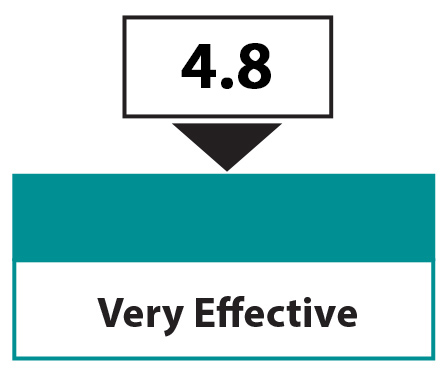
Change from 2023: +12%
Program Area Objective
Minimize the risk of erosion (reduced risk of damage to infrastructure from erosion due to the
maintenance and construction of erosion control structures).
Actions
- Inspection and maintenance of existing erosion control infrastructure.
- Construction of new erosion control structures to protect high-priority sites where Region of Peel sanitary infrastructure or watermains may be at risk.
Results
- Implementation of the annual plan for the Region of Peel was very effective, with remediation completed as planned at the Hazelwood Park Sanitary Infrastructure showcase project.
- Remediation at the Crawley Park project saw slight delays on account of the July and August storms, with completion scheduled for early 2025 at all five sites within the project area.
- 611 infrastructure hazard monitoring sites were inspected in the 2024 monitoring season, in addition
to 11 critical priority sites.
- 35 erosion control structures were built in the previous five years, inspected in 2024, and assessed to
be in sound condition.
Co-benefits
| Health Benefit |
|
Protecting buried linear infrastructure from erosion hazards also provides an opportunity to protect publicly accessible parklands and trails adjacent to these municipal assets during remediation work. This, in turn, provides safe and secure access to outdoor activities and enables positive physical and mental health outcomes in the community. |
| Environmental Benefit |
|
The natural assets (e.g., trees, shrubs, etc.) adjacent to Peel’s buried linear infrastructure threatened by erosion hazards, are also protected from failure caused by erosion during remediation work completed to protect the municipal assets themselves. |
View the Detailed Program Area Report
RESTORATION AND NATURAL HERITAGE SCIENCE
Budget: $3,955,064
SCORE
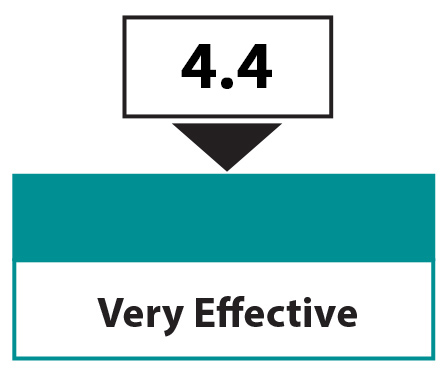
Change from 2023: -4%
Program Area Objective
Reduced impacts of climate change-related extreme weather events on flooding, erosion, water quality degradation, species and natural features (due to restoration projects and the usefulness of natural heritage-related research).
Actions
- A wide range of restoration projects (aquatic and wetland restoration, riparian and valley restoration, stream and natural channel restoration, and terrestrial restoration), as well as the implementation of Low Impact Development (LID) and natural green infrastructure projects.
- Natural heritage-related research that assesses climate change vulnerability and the effectiveness of habitat management practices, mapping of significant wildlife habitat, and impact thresholds to guide the management and conservation of wildlife.
Results
- All restoration projects were assessed by the expert panel as having a very high impact on climate change adaptation, specifically in four impact areas: reduced flooding, reduced erosion, reduced water quality degradation, and reduced negative impacts on species and natural features.
- Projects that demonstrated a more holistic approach, where different types of restoration techniques were connected and integrated into one project, stood out with the expert panel. One example of this was a project that incorporated reforestation and meadow restoration at a large scale as part of a large land acquisition.
- The ratings and comments from the reviewers examining research-based outputs identified the significance of these outputs in dealing with climate change, enhancing the management of natural assets, and encouraging collaboration among stakeholders. They recognized that the outputs offer crucial insights for policy development and practical strategies for carrying out climate change protection measures, all while promoting informed decision-making and ongoing improvement.
- The only noted recommendations for improvement pertain to increased collaboration, possibly through in-person meetings to better share experience and transfer knowledge, and to continue to collaborate on the cross-cutting theme of health and biodiversity to inform decision-making.
Co-benefits
| Social and Quality of Life Benefits |
|
Research that prioritizes conservation and the protection of trees, forests and green infrastructure provides the community with access to healthy green spaces which supports positive mental, emotional and cultural connections to nature and enhanced opportunities for outdoor recreation and exercise. |
| Financial Benefit |
|
Implementation of restoration and natural green infrastructure projects can also provide the catalyst for the rehabilitation of failing infrastructure and the protection/realignment of accessible public trails during the restoration work itself, which reduces the need for ongoing maintenance and repair. |
| Environmental Benefit |
|
Restoration, protection, and enhancement of the natural system contributes to improved biodiversity of the system by creating thriving and resilient habitats that facilitate the movement of species within connected corridors. |
View the Detailed Program Area Report
FOREST MANAGEMENT
Budget: $1,519,152
SCORE
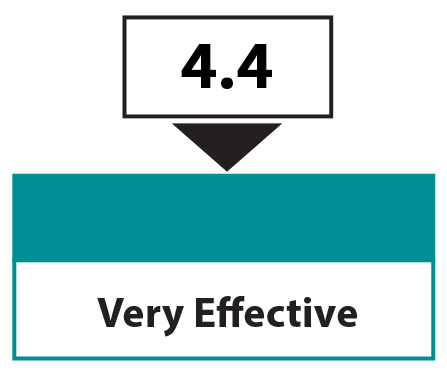
Change from 2023: -2%
Program Area Objective
Increased forest health and ability to withstand climate-related extreme weather events (due to forest management and the removal of hazard trees).
Actions
- A wide range of forest monitoring, inventory, management planning, outreach and stewardship activities.
- Active management projects and programs to address:
- Forest health and disease prevention
- Canopy expansion
- Invasive species
- Hazard trees
- Resilience to extreme events
Results
- Experts felt that the programs had a very high impact on the resiliency of forest systems and demonstrated leadership in the sector, particularly as municipalities do not directly undertake these kinds of programs.
- Component programs within the program area implemented a comprehensive and wide-ranging suite of management actions to produce a holistic approach towards forest management in the region.
- Forest management topics for further examination include adapting to decreasing private land availability through invasive plant management to create new plantable locations, as well as increasing resources and workshops available to assist the public in learning about and managing fire risk. A holistic approach to forest management that incorporates invasive species monitoring and management was also proposed.
Co-benefits
| Financial Benefit |
|
Forest management programs support the advancement of Conservation Authorities’ knowledge, expertise, and understanding of forest management practices and are used to leverage additional funding to support other municipal forest management programs and deliverables. |
| Social and Quality of Life Benefits |
|
Healthy forests and expanded tree and forest canopy resulting from effective forest management practices help to reduce the urban heat island effect and provide an improved experience for the public when visiting local parkland and greenspaces. |
| Environmental Benefit |
|
Strategic planning undertaken as an element of forest management programs, targets key areas for forest health improvement and expansion, and can result in improved ecosystem health for the larger system (e.g., enhanced biodiversity, improved corridor connectivity for significant species and soil stabilization in erosion-prone areas). |
View the Detailed Program Area Report
GREEN INFRASTRUCTURE
Budget: $4,360,752
SCORE
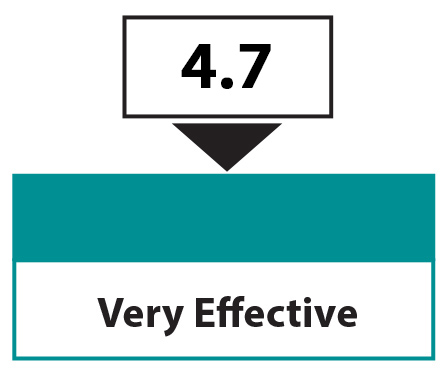
Change from 2023: +4%
Program Area Objective
Reduced risks of degradation of water resources and terrestrial natural systems (due to water quality and/or quantity problems such as floods and stormwater overload).
Actions
- Development of integrated stormwater asset management process and procedures for municipalities including design and construction reviews, rapid assessments, inspections and monitoring of green engineered infrastructure to support life cycle management.
- Transfer of knowledge on green stormwater infrastructure to increase adoption of integrated stormwater management (SWM) practices.
- Neighbourhood stormwater management projects with a focus on Low Impact Development (LID) implementation.
Results
- Programs were rated from highly to very highly useful for providing training on the implementation, inspection, and maintenance of LID and SWM projects.
- Reviewers praised the program for effectively building education and awareness at both community and operational levels, with tailored training that strengthened municipal staff capacity and supported integration into Peel’s asset management system.
- The projects were seen as critical for inventory development, regulatory compliance, and risk-informed planning, while also advancing innovative asset management practices and aligning with broader city and regional strategies.
- Recommendations for improvement include improved work planning, streamlining certain initiatives offered, increased project update meetings and integration with various Peel working groups. Leadership on the inconsistent use of technical stormwater management jargon was sought, requiring collaboration at all levels (conservation authorities, municipalities, private industry).
Co-benefits
| Social and Quality of Life Benefits |
|
Increased opportunities to participate in local climate action strengthen the community’s connection to and appreciation for nature and enhance community cohesion by working together towards common goals. |
| Environmental Benefit |
|
Increased opportunities to participate in local climate action strengthen the community’s connection to and appreciation for nature and enhance community cohesion by working together towards common goals. |
View the Detailed Program Area Report
KNOWLEDGE AND AWARENESS PERFORMANCE REPORT
SCHOOL PROGRAMS
Budget: $1,985,894
SCORE
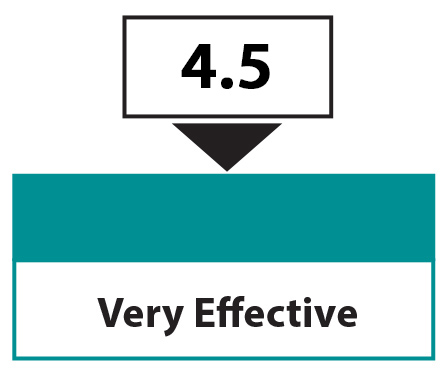
Change from 2023: +2%
Program Area Objective
Positive changes in the behaviour of students regarding support for, and participation in, climate change adaptation and mitigation activities.
Actions
- Planning and delivery of climate change-related education and awareness programs for students and
professional development training for teachers.
Results
- Programs were rated effective to very effective in encouraging students’ participation in climate change adaptation and mitigation activities. The majority of teachers and students agreed or strongly agreed that the programs increased students’ knowledge of nature, the environment, and the impacts of climate change.
- Teachers appreciated that environmental education and in-school programming included the positive impact of hands-on learning activities which kept students involved and provided them with practical learning experiences related to nature, the environment and climate change. Many educators appreciated activities like planting native species, games, and interactive lessons.
- Youth volunteers indicated they appreciated the opportunity to learn new things – particularly about climate change, invasive species and conservation. The variety of activities undertaken and sense of accomplishment that was obtained was enjoyable.
- Areas for improvements include: expanding on opportunities to continue the post-program application of learning at schools, resource considerations (more time for hands-on activities, wider variety for follow-up materials and funding for transportation), and mitigating, as much as possible, the negative experiences related to environmental considerations (heat, cold, insects).
Co-benefits
| Social and Quality of Life Benefits |
|
Outdoor education programs related to climate change awareness and education strengthen students’ connection to, and appreciation for, nature and the natural environment, and result in students having a broader perspective of the world they live in and their role in protecting the environment. |
| Educational programming related to climate change awareness and environmental education provide a foundation to advance a range of personal development skills such as leadership, mentorship, cooperation, and volunteerism, that are valuable skills both for the student and in our society. |
| Health Benefit |
|
Outdoor education programs related to climate change awareness and education provide an opportunity for students to be active and spend time outdoors in nature, which provides physical and emotional health benefits that are important aspects of healthy growth. |
View the Detailed Program Area Report
COMMUNITY ENGAGEMENT AND STEWARDSHIP
Budget: $2,186,091
SCORE
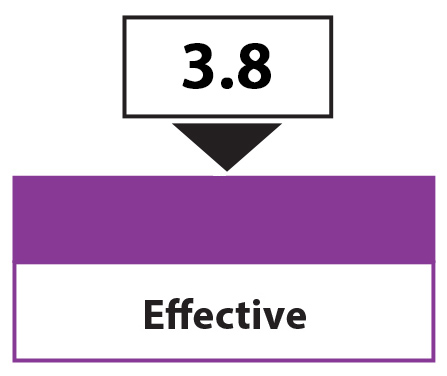
Change from 2023: -3%
Program Area Objective
Positive changes in behaviour regarding support for and participation in climate change adaptation and mitigation activities.
Actions
- Planning and delivery of climate change-related education, engagement and stewardship programs to the community.
Results
- The five contributing programs in this program area were rated from effective to very effective in encouraging support for and participation in climate change adaptation and mitigation activities.
- Program participants – including community members, landowners, and corporate partners – engaged in a variety of community actions including tree plantings, land and water stewardship, and climate action and resilience projects on both public and private lands.
- Participants indicated in post-program surveys that their experiences helped them to better understand the impacts of climate change and equipped them with the information and tools necessary to engage in meaningful community action towards climate adaptation and mitigation in the future. Widespread feedback received noted staff knowledge, expertise and well-run events that enabled knowledge gain and motivated action.
- Areas for improvement include transitioning to digital administrative processes and higher quality and increased program promotion for more program uptake by broad audiences.
Co-benefits
| Social and Quality of Life Benefits |
|
Participation in volunteer, hands-on, nature-based programming that improves the natural environment and local resiliency against the impacts of climate change provides an opportunity for like-minded people to work together towards a common goal, supporting community cohesion, relationship building, networking, and increased landowner and community capacity. |
Environmental Benefit |
|
Volunteer and landowner actions such as tree planting help to create neighbourhoods, landscapes, and ecosystems that are more climate change-resilient and biodiverse. |
| Health Benefit |
|
Participation in physical, hands-on climate change adaptation and mitigation activities such as tree planting provides an opportunity for people to spend time being active outdoors, which supports improved physical, mental and emotional health. |
View the Detailed Program Area Report
MITIGATION PERFORMANCE REPORT
GREENHOUSE GAS (GHG) EMISSIONS REDUCTION/SEQUESTRATION
SCORE
On Track To Reach Sequestration 2030 Goal
29.4% Progress
Program Area Objective
Amount of GHG emissions reduced annually through emissions reduction measures and carbon sequestration.
Sequestration target of 6,137 tonnes of CO2e.
Actions
Measures GHG emissions reduction and sequestration activities in the following five program areas: Climate Science, Forest Management, Green Infrastructure, School Programs, and Community Engagement and Stewardship.
Activities include:
- Support for projects to reduce GHG emissions for CA-owned facilities within the Region of Peel (building retrofits, fleet electrification, and fuel-switching projects).
- Engagement programs to facilitate community-based GHG emissions reduction projects.
- Atmospheric GHG removals through CA-led tree, shrub, and seedling plantings (sequestration).
Note: A 2030 sequestration capacity target has been established at 6,137 tonnes of CO2e, a joint CA target based on projected 10-year planting plans.
Sequestration capacity refers to the CO2e absorption made possible by the annual planting of trees and shrubs funded by the Region of Peel. Both the annual sequestration capacity addition and progress towards the target are reported annually.
Results
- 3,413 tonnes of CO2e emissions reduced through building, solid waste and industry process retrofit projects in 2024.
- 547 tonnes of CO2e sequestration capacity was added in Peel Region in 2024 (sequestration capacity refers to the amount of emissions that are able to be captured and stored through tree, shrub, and seedling plantings).
- Cumulative annual sequestration capacity reached 1,807 tonnes of CO2e due to planting efforts executed in 2021, 2022, 2023, and 2024.
View the Detailed Program Area Report
NEXT STEPS
Continuous improvement considerations remain a priority for the ongoing development and refinement of this Measurement System. The overall goal of ensuring integration and practical alignment with the Region’s needs remains an area of focused dedication.
To this end, the following next steps are recommended:
- Pursue opportunities to serve our partner municipal client needs, particularly as Region of Peel continues to advance and enhance their Climate Change Master Plan and set priorities. Ongoing dialogue is essential to ensuring CA programs and services and the Measurement System are well understood and positioned for the needs of the future.
- Assess whether all desired audiences for this analysis and reporting are being reached and optimize report timing to help inform decision-making at different levels. This includes ensuring CA audiences receive feedback for improvements and Region of Peel audiences are aware of this annual assessment to inform future fiscal planning processes.
- Considerations for making the Measurement System results more accessible (i.e., dashboards) and interactive using a digital layout have been initiated and it is recommended this work continues through collaborative input.
- Build into the process for future years the solicitation of feedback on process improvements for the Measurement System itself from program area staff, reviewers and expert panel members. For example, a review of guidance provided to reviewers has been identified as an area benefiting further refinements.