
Blue jays are one of the most recognizable birds in Canada, especially in Ontario. Their vibrant blue feathers make them a favorite among birdwatchers and backyard nature lovers. But here’s a surprising fact: blue jays aren’t truly blue.
The Science Behind the Blue
At Toronto and Region Conservation Authority’s (TRCA) Tommy Thompson Park Bird Research Station (TTPBRS), our bird migration monitoring program helps reveal fascinating insights.
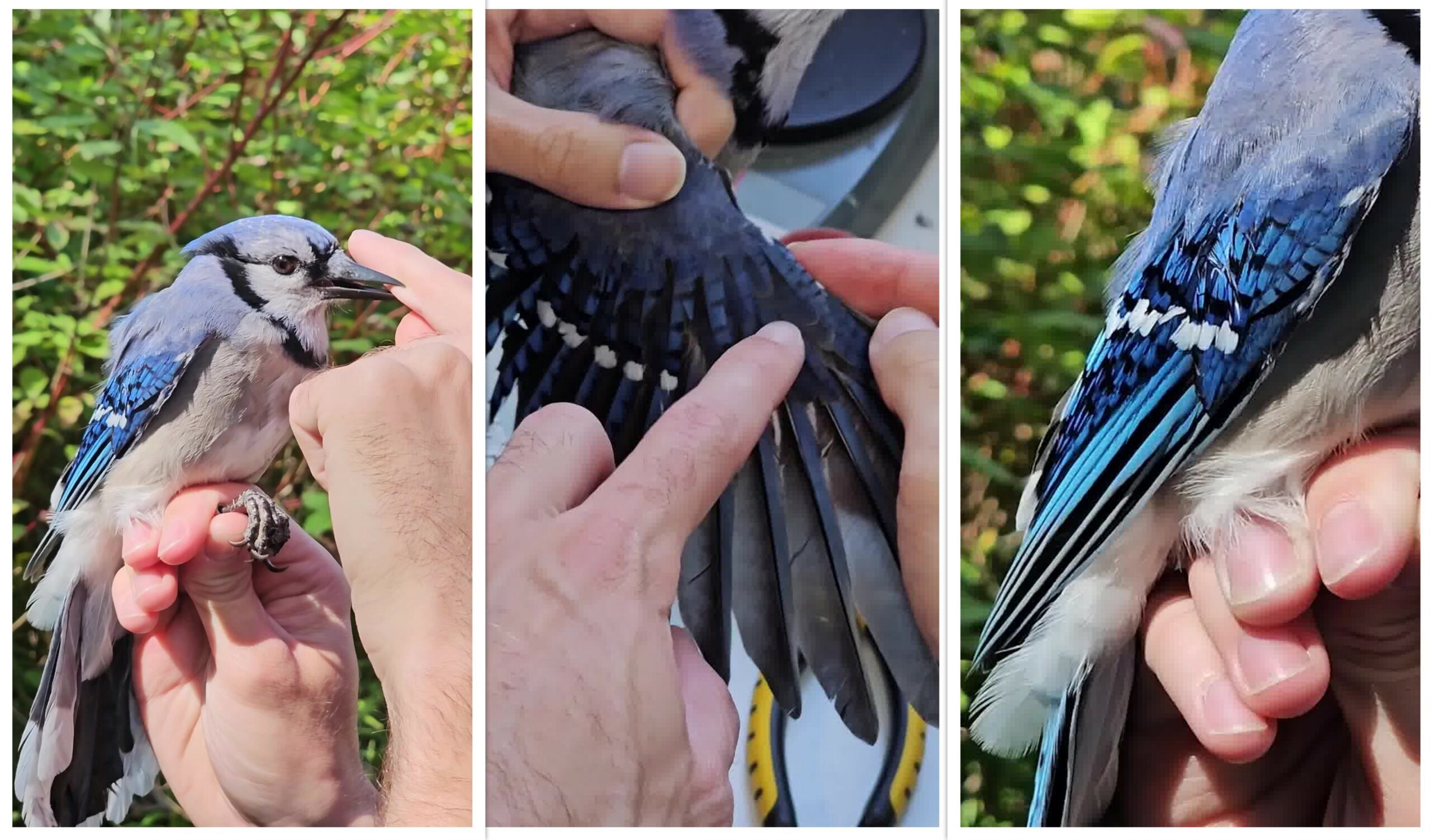
Despite their name and appearance, blue jays don’t have blue pigment in their feathers. Instead, their color comes from a phenomenon called structural coloration — a fascinating trick of physics.
Each feather contains microscopic grooves and ridges spaced precisely to reflect blue wavelengths. When light hits these structures, it bounces back as blue — not because of pigment, but because of how the light is manipulated. If you backlight a blue jay feather, it appears grayish brown, revealing the melanin underneath.
Fun Fact: Blue pigment is extremely rare in nature. Most “blue” animals use structural tricks to achieve the color.
Why Blue Jays Look Dull on Cloudy Days
If a Blue Jay seems grayer on a cloudy day, there’s a reason. Structural coloration depends on strong light, with less sunlight meaning fewer reflections, making the feathers look muted. It’s another reminder of how beautifully interconnected light and biology can be.
From the Field: Insights from TRCA’s Bird Monitoring Station
At Tommy Thompson Park Bird Research Station, TRCA scientists and volunteers have been monitoring migratory birds, including Blue Jays, since 2003. As part of the Canadian Migration Monitoring Network, the station collects valuable long-term data on bird populations, migration timing, and habitat use across the Greater Toronto Area.
Through careful bird banding and observation, our researchers help track changes in bird health and behaviour over time, providing critical information for conservation planning and biodiversity protection.
Beyond data collection, TTPBRS also plays a vital role in public education and engagement, offering guided walks, workshops, and volunteer opportunities that connect people directly with Toronto’s urban wilderness and the science that protects it.
Learn more about the work happening at Tommy Thompson Park Bird Research Station.
Protecting the Habitat That Protects the Jays
Blue jays thrive in forests, parks, and green spaces across Ontario — but their habitats are under pressure. If you’ve ever enjoyed the sight of a blue jay in your backyard or on a morning walk, consider giving back to the ecosystems that support them.
The Toronto and Region Conservation Foundation works to protect and restore natural spaces across the region. Your donation helps preserve the forests, wetlands, and biodiversity that make sightings like these possible.
By protecting and restoring habitats that Blue jays need to thrive, many other more vulnerable species are also protected.
Whether you’re a bird lover, a nature enthusiast, or just someone who appreciates the quiet magic of a blue jay’s shimmer, supporting conservation is a powerful way to keep that magic alive!.
A Nod to the Toronto Blue Jays
Interestingly, the Toronto Blue Jays baseball team shares its name with this clever corvid. While the bird’s intelligence is well-documented, the team’s performance this season has also been turning heads. Whether you’re a fan of feathered flyers or fast pitches, it’s a good year to say, “Go Jays!”

A Note from Our Banding Team
If you notice a blue jay holding its beak open during handling, don’t worry — it’s not a stress response. Blue Jays are known to gape or clap their bills when handled, often as a natural defensive behaviour rather than a sign of distress.